

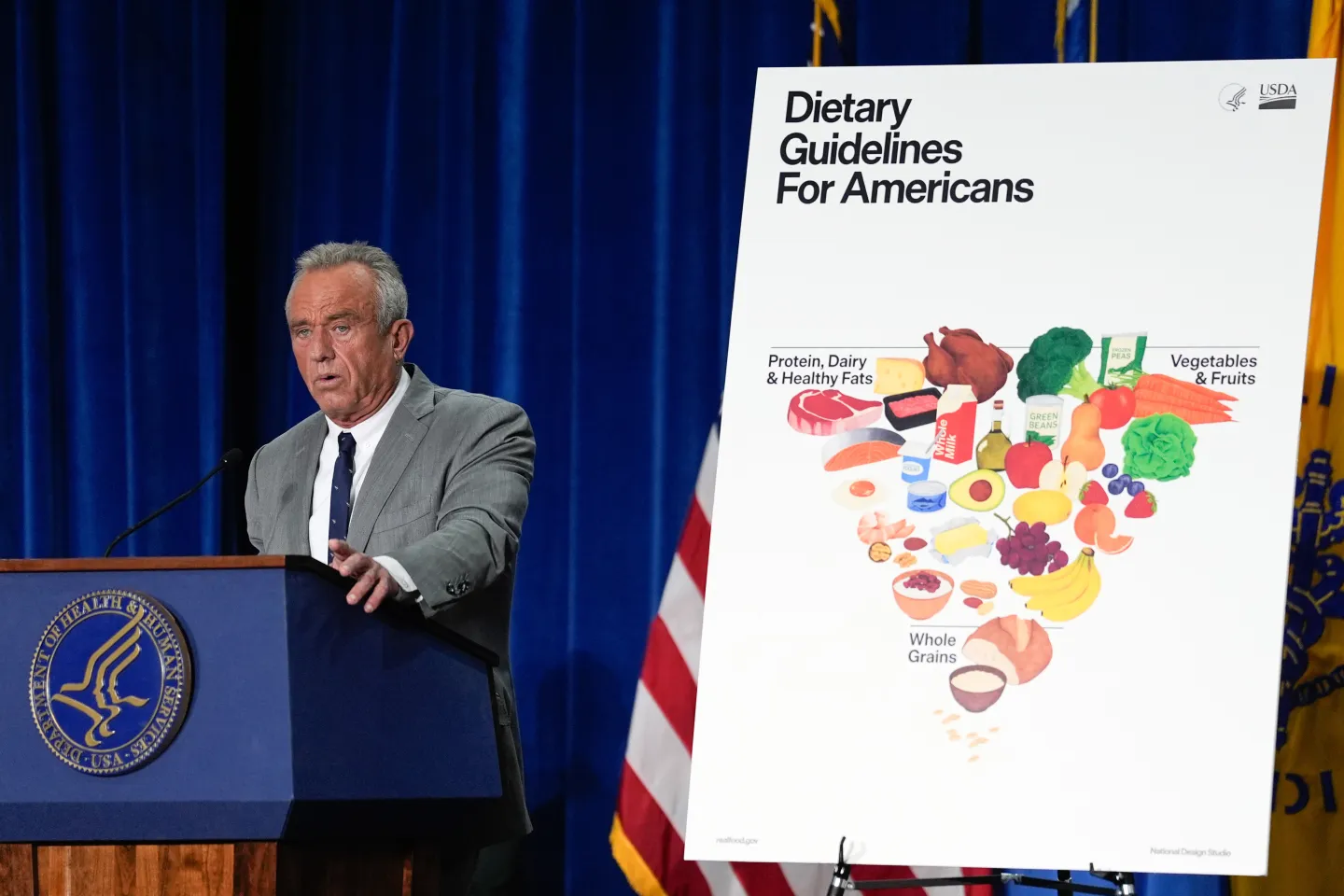
The American grocery aisle is undergoing a significant transformation, with federal nutrition policy changes, spearheaded by Robert F. Kennedy Jr., now visibly influencing consumer choices and corporate strategies. As head of Health and Human Services, Kennedy’s “Make America Healthy Again” initiative has set a new course for dietary guidelines, moving away from long-held nutritional tenets and prompting a re-evaluation within the food industry. This movement, gaining traction with nearly four out of ten parents expressing support, emphasizes whole foods and a reduction in ultra-processed items, a philosophy Marion Nestle, a nutrition policy expert, notes aligns with the belief that such eating patterns lead to greater health. President Donald Trump, in announcing Kennedy’s appointment, framed the initiative as a challenge to what he termed the “industrial food complex and drug companies.”
One of the most immediate impacts has been a dramatic overhaul of dietary guidelines by the Department of Agriculture. Earlier this year, the USDA fundamentally revised its recommendations, notably re-embracing full-fat dairy and various fats, including saturated fats. Kennedy declared an “end to the war on saturated fats,” advocating for three servings of full-fat dairy daily. This marks a reversal from previous guidelines that de-emphasized saturated fats and prioritized whole grains, which Kennedy described as “upside down.” This shift aligns with existing consumer trends; Americans consumed 650 pounds of dairy per person in 2024, with butter consumption at a record high, alongside increased yogurt and cottage cheese intake. Conversely, plant-based milk sales have seen declines, with companies like Oatly reporting slumps.
Another significant policy target for Kennedy has been seed oils. While no outright ban has been implemented, federal messaging now actively questions the health implications of oils such as canola and corn, promoting animal fats like beef tallow as healthier alternatives. This rhetorical shift has already spurred changes within the food industry, with major players like PepsiCo announcing the removal of canola and soybean oil from products such as Lay’s and Tostitos chips. Smaller companies, including Real Good Foods, have also begun marketing “seed oil-free” frozen products, indicating a broader industry response to the updated federal stance, despite some nutrition experts like Nestle expressing caution regarding high animal fat consumption and its potential link to increased cholesterol and heart disease risks.
The drive to eliminate synthetic dyes represents another substantial change visible on supermarket shelves. Last April, Kennedy announced plans to phase out these dyes, characterizing them as “petroleum-based chemicals” and a danger, particularly to children. This led to coordinated regulatory efforts to remove common synthetic colorants, replacing them with natural alternatives like galdieria extract blue, derived from algae. Companies such as PepsiCo and Tyson Foods have already removed synthetic dyes from some products, leading to paler or colorless versions of items like Doritos and Cheetos. Other major brands, including Hershey, Utz, Campbell’s, and Mars Wrigley with its Skittles and M&Ms, have committed to similar reforms in the coming years. This suggests a future where grocery stores will feature fewer vibrantly colored processed foods and more “no artificial colors” labels.
Finally, the federal focus on protein has intensified, aligning with a broader consumer trend. Kennedy’s updated federal guidelines now recommend 1.2 to 1.6 grams of protein per kilogram of body weight daily, urging citizens to prioritize protein at every meal. While Nestle observes that many Americans already consume ample protein, the market has responded vigorously. The presence of protein-fortified products has surged, from protein Cheerios to high-protein ice creams from brands like Protein Pints, which reported significant revenue growth last year. This emphasis on protein, coupled with Kennedy’s ongoing efforts against high-fructose corn syrup, an ingredient he views as emblematic of an unhealthy food supply, continues to reshape product formulations, with companies like Tyson and Kraft Heinz moving to eliminate HFCS from their offerings. Despite these federal shifts and industry adaptations, Nestle highlights a persistent challenge: the economic reality that often dictates food choices, noting that “nobody follows dietary guidelines” if ultra-processed options remain more affordable than whole foods.
