

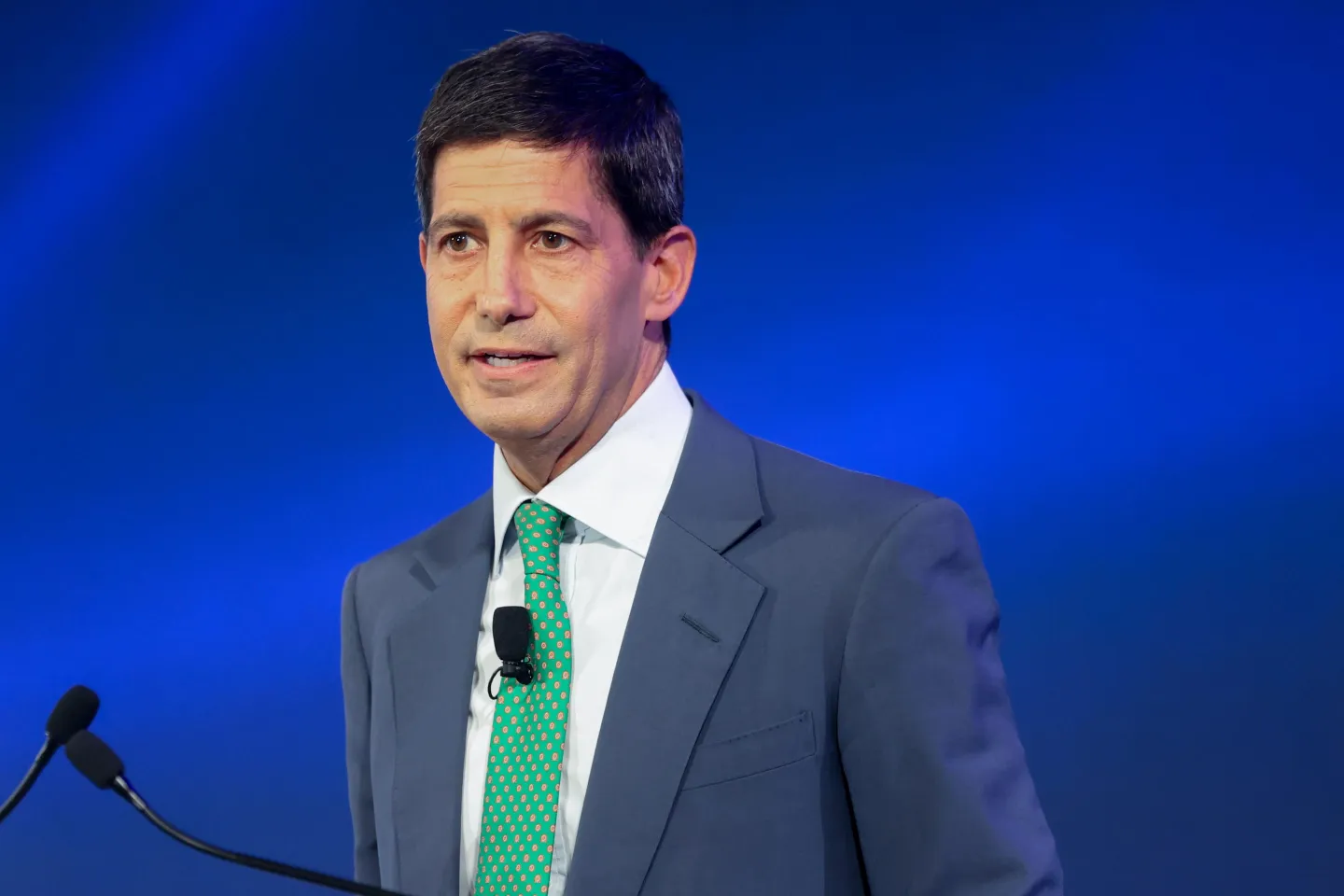
Donald Trump’s nomination of Kevin Warsh for Federal Reserve chair signals a potential shift in the central bank’s approach, moving towards a less interventionist stance and a more optimistic economic outlook. Trump announced his selection of Warsh on Truth Social, praising him as a future “GREAT Fed Chairman.” Warsh brings a significant background to the role, having served on the Federal Reserve Board of Governors from 2006 to 2011, a period that included navigating the 2008 financial crisis as a key advisor to then-Chairman Ben Bernanke. His prior experience also includes a tenure at Morgan Stanley and a role as special assistant to President George W. Bush for economic policy, suggesting a blend of private sector and Washington insight.
Warsh’s vision for the Federal Reserve aligns with a philosophy advocating for the central bank to adopt a more reserved posture. This perspective suggests a departure from the current environment where the Fed’s frequent communications, including press conferences, public appearances, and detailed economic reports like the Beige Book, are closely scrutinized by markets. He has previously indicated that Fed leaders might benefit from fewer public pronouncements, arguing that officials can become “prisoners of their own words.” This could mean a return to a more traditional, less communicative central bank, a change that might initially challenge investors accustomed to a steady stream of information regarding monetary policy decisions.
His critique of the current Federal Reserve’s “wait-and-see approach” was evident in a Wall Street Journal op-ed, where he advocated for discarding forecasts that suggest subpar growth and elevated inflation are acceptable. Warsh exhibits a bullish outlook on the U.S. economy, mirroring sentiments from figures like JPMorgan CEO Jamie Dimon, who has publicly supported Warsh. This optimism stems from a belief in the nation’s entrepreneurial spirit, with artificial intelligence cited as a significant driver of future growth. Such a perspective suggests a monetary policy that actively encourages expansion rather than cautiously reacting to short-term economic fluctuations.
Economists have noted that the Fed has at times appeared overly focused on immediate interest rate adjustments, potentially overshadowing its mandate to moderate long-term interest rates. Warsh’s leadership could steer press conferences and public discourse towards broader macroeconomic themes and challenges, rather than encouraging speculation over subtle linguistic changes in official statements. This shift would aim to provide clearer guidance and reduce market volatility stemming from minute interpretations of Fed communications.
Beyond his professional credentials, Warsh’s personal life offers a glimpse into his values. Married to Jane Lauder, granddaughter of Estée Lauder and an heiress to the beauty empire, Warsh is known for his understated demeanor. He reportedly prefers quiet fine dining while reading the newspaper and often observes economic conferences from the sidelines rather than taking center stage. The couple also dedicates resources to research aimed at extending pet longevity, inspired by their cockapoo, Thaddeus. Jane Lauder, recognized as one of Fortune’s Most Powerful Women, has even invested in pet-related ventures through her firm, TAW Ventures.
A critical question surrounding Warsh’s potential appointment revolves around his ability to project political independence, especially given Trump’s previous pressure on the central bank. The concern among some observers is that a Trump appointee might prioritize presidential preferences over the Fed’s traditional autonomy, potentially leading to policies that could destabilize the economy. However, Warsh’s past comments suggest a desire for the Fed to reduce its public exposure, which could inadvertently de-escalate tensions with the White House by limiting opportunities for political interference through public statements. This approach could be viewed as a strategic move to insulate the central bank from political pressures, allowing it to focus on its core mandates without constant external scrutiny.
