

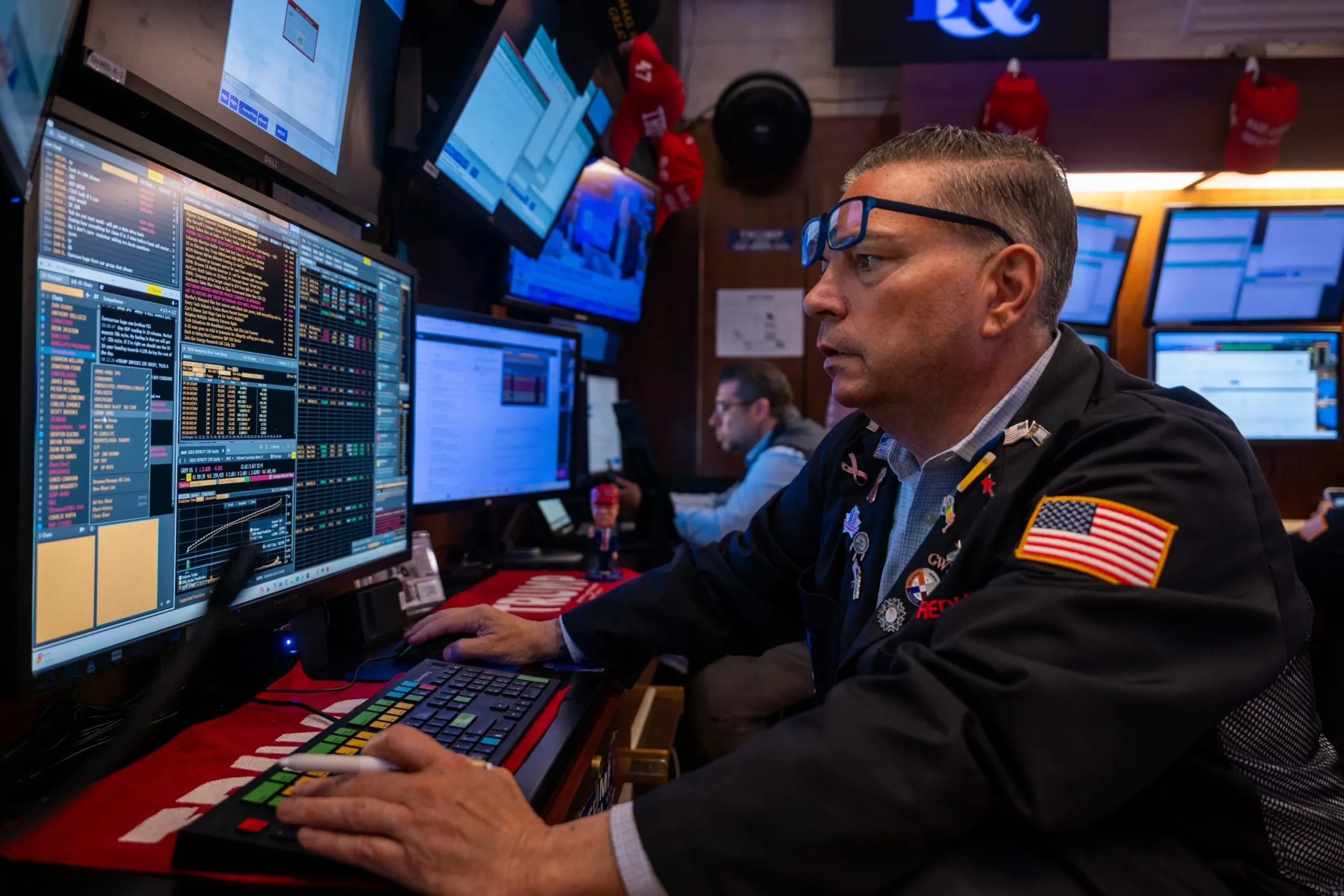
The financial markets experienced a notable tremor recently, with software companies collectively shedding an estimated $1 trillion in market capitalization. This significant downturn reflects a recalibration of investor sentiment regarding the pervasive influence of artificial intelligence, particularly its potential to disrupt established business models within the technology sector. While the S&P 500 futures showed some signs of stabilization before the New York trading session, suggesting a temporary pause in the selling frenzy, the prior days saw the index dip by 0.51%, closing at 6,882, after a period of hovering near the 7,000 mark.
Globally, markets mirrored this cautious mood, with South Korea’s KOSPI index registering a substantial 3.86% loss. The epicenter of this financial contraction was largely the technology and software industry. For an extended period, the prevailing market narrative suggested that substantial capital expenditure directed towards AI development would invariably translate into enhanced efficiencies, heightened productivity, and ultimately, a boost in corporate revenues and earnings per share. However, recent trading patterns indicate a growing awareness among investors that AI’s transformative power is not exclusively additive; it also carries the capacity to displace traditional software solutions, potentially eroding the revenue streams of companies reliant on these older paradigms.
Alphabet, a bellwether in the tech space, saw its shares decline by nearly 2% in one trading session and an additional 2.53% overnight. This occurred despite the company reporting better-than-forecast revenue growth, which demonstrated that its advertising sales were not being cannibalized by the increasing adoption of AI tools, including its own Gemini AI chatbot and the ‘AI Mode’ integrated into Google Search. The company’s decision to double its AI capital expenditure, announced during its earnings call, appears to have contributed to investor apprehension rather than assuaging it, highlighting the market’s evolving perception of AI investments.
This dynamic is particularly salient given the outsized influence of tech giants like Alphabet on broader market indices. Towards the close of 2025, the ten largest companies were projected to constitute nearly 41 percent of the S&P 500’s total weight, according to analysis from RBC Wealth Management. This concentration meant that fluctuations within the tech sector had a disproportionate effect on the overall index. Yet, a closer examination reveals a more nuanced picture. The equal-weight S&P 500, an alternative index that assigns equal value to each of its 500 constituents irrespective of market capitalization, reached a record high. This suggests that while tech stocks faced considerable pressure, many non-tech companies within the index demonstrated robust performance.
Jim Reid and his team at Deutsche Bank observed that while tech stocks experienced sharp contractions, many broader indices largely maintained their ground. On one recent trading day, the S&P 500 saw 363 advancers, marking the highest number in two weeks. This selective buying pattern points to a particular segment of the market stepping in. Axios reported that retail traders, often colloquially termed “the dumb money” by institutional investors, have been active in buying these dips. Historically, retail investors were characterized by their tendency to enter bull markets late and exit bear markets prematurely.
However, the landscape has shifted considerably. Platforms like Robinhood have democratized access to trading, significantly increasing the presence of retail buyers in the market. These individual investors have shown a consistent propensity to capitalize on market downturns, a trend particularly noticeable since what some refer to as “Liberation Day” last year. That period saw the S&P experience a roughly 15% decline following President Trump’s tariff plan, only to rebound by 38% from its trough by the end of the year. Whether this sustained retail interest signals the end of the current tech-focused selloff remains an open question. As Chris Turner from ING noted, predicting the longevity of this U.S. tech correction is challenging, and a fully invested buy-side could be vulnerable to further negative news.
