

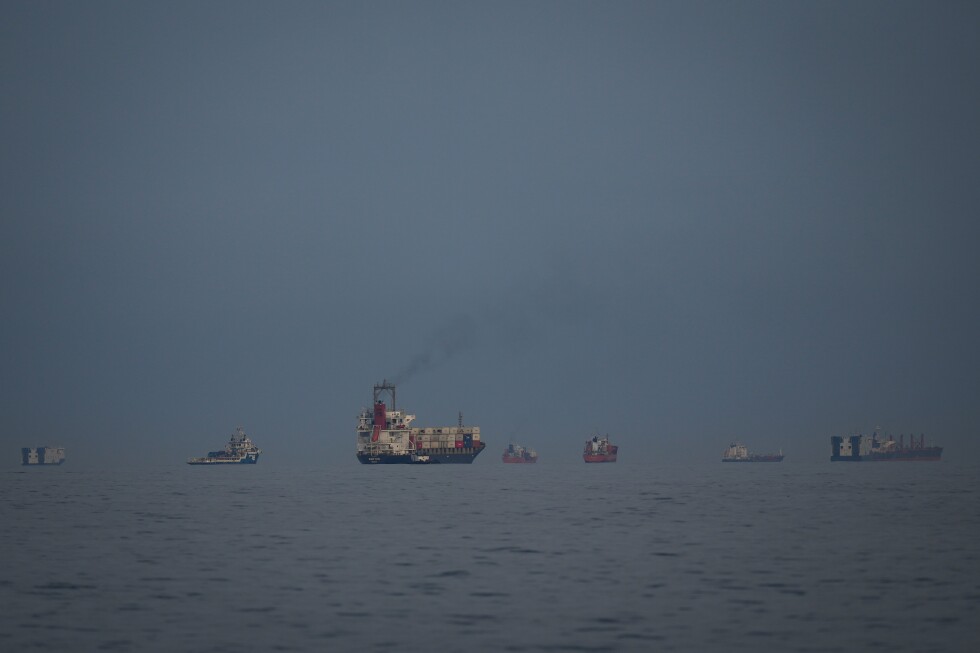
The Strait of Hormuz, a critical maritime choke point for global oil shipments, observed an unusual surge in traffic this past Saturday, days after a fragile ceasefire between the United States and Iran was announced. Two Chinese supertankers, the Cospearl Lake and the He Rong Hai, along with the Greek-flagged Serifos, navigated the waterway, potentially marking the most significant movement of crude through the strait since early March. This period saw traffic nearly halt following the outbreak of conflict.
These three vessels collectively possess a transport capacity of approximately six million barrels of crude. While this figure represents a substantial volume, it still falls short of pre-conflict shipment levels. Prior to the recent conflict, the Strait of Hormuz typically facilitated roughly a fifth of the world’s oil and a similar proportion of liquefied natural gas. The near cessation of traffic, which began around February 28, has profoundly impacted global energy markets, leading to a loss of millions of barrels of supply. A sustained resumption of shipments would undoubtedly ease pressure on increasingly tight physical markets worldwide.
The Cospearl Lake, having loaded its cargo in Iraq, and the Serifos and He Rong Hai, both laden with Saudi Arabian crude, appear to have followed a specific northerly route through the strait. This path, as demanded by Tehran, traverses Iranian waters, passing along the coasts of Qeshm and Larak Islands, diverging from the traditional shipping lanes that typically hug the southern coast of the waterway. This navigational detail underscores the complex geopolitical landscape governing transit through the strait, even amidst signals of de-escalation.
The appearance of the two Chinese supertankers is particularly noteworthy, as they represent the first vessels from the Asian nation observed transporting barrels out of the region since the conflict began. This development could be seen as a positive for Beijing, suggesting that even a major energy consumer like China has felt the squeeze of disrupted supply chains. The Serifos, for its part, was signaling its destination as Malacca in Malaysia, a common waypoint for ships bound for various destinations across Asia. Reports from Malaysian media on Friday indicated permission had been granted for the country’s freighters to depart, aligning with Iran’s stated policy that vessels require permission to sail through the waterway.
Despite the recent movements, oil flow through the strait remains far below peacetime volumes. For context, Iran itself exported crude at a rate of approximately 1.7 million barrels per day last month. The current activity, even if sustained for a single day, would imply around half the normal rate of shipments through the waterway. Peace talks between the United States and Iran are reportedly scheduled to take place in Islamabad in the coming days, a diplomatic effort that could further influence the stability and accessibility of this vital maritime corridor. While digital ship-tracking data, like that which identified these three tankers, can sometimes be manipulated, the signals from these vessels have been assessed as consistent with genuine movements. The world watches closely to see if this weekend’s activity marks a turning point towards a more consistent flow of oil through the Strait of Hormuz.
