

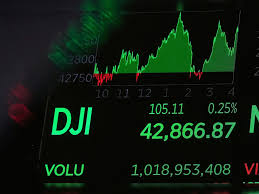
The financial markets registered a significant milestone this past week as the Dow Jones Industrial Average closed above 50,000 points for the first time in its history. This achievement marks a notable moment for the index, reflecting a period of sustained growth and investor confidence across a broad spectrum of American industries. The benchmark, which tracks 30 prominent U.S. companies, has shown resilience through various economic cycles, consistently adapting to shifts in the global financial landscape.
This ascent past the 50,000 threshold represents more than just a numerical increase; it underscores the cumulative effect of corporate earnings, technological advancements, and strategic market adjustments over recent years. Analysts point to a combination of factors contributing to this trajectory, including robust corporate profits from leading companies within the index, ongoing innovation in sectors like technology and healthcare, and a generally supportive monetary policy environment. While individual sectors have experienced their own fluctuations, the composite strength of the Dow’s constituents has propelled its overall valuation.
The journey to this new high has been characterized by both gradual gains and periods of accelerated growth. Over the past decade, the index has navigated challenges ranging from geopolitical tensions to supply chain disruptions, yet it has continued its upward climb. This steady progression highlights the adaptive nature of the companies represented in the Dow, many of which have diversified their operations and expanded their global reach, thereby mitigating risks associated with any single market or region.
For investors, the crossing of the 50,000-point mark may serve as both a psychological benchmark and a signal of underlying economic health. While the Dow Jones Industrial Average is not the sole indicator of market performance, its long-standing presence and the caliber of its constituent companies make it a closely watched barometer. The current environment, characterized by evolving inflation expectations and ongoing labor market adjustments, continues to present a complex picture, yet the index’s performance suggests an underlying optimism among market participants regarding future economic prospects.
Looking ahead, market watchers will undoubtedly be scrutinizing upcoming economic data releases, corporate earnings reports, and central bank communications for clues about the market’s next moves. The achievement of 50,000 points for the Dow Jones Industrial Average is a testament to the dynamic nature of capital markets, where innovation and adaptation remain key drivers. It reflects the ongoing interplay between corporate strategy, investor sentiment, and broader economic forces that shape the trajectory of global finance.
