

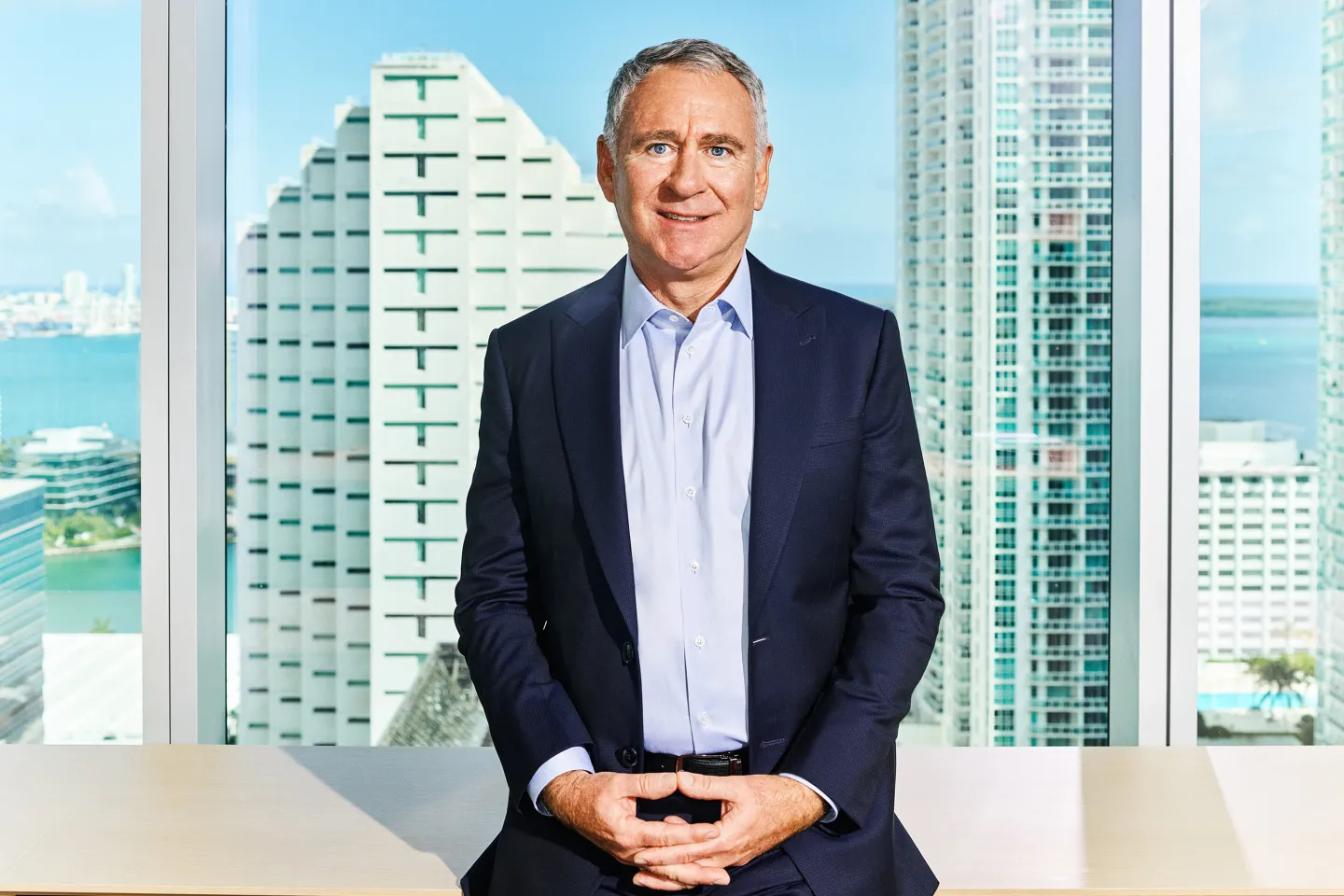
The skyline of Miami is poised for a dramatic transformation, with a 1,049-foot tower on Biscayne Bay emerging as a symbol of Ken Griffin’s expansive vision. The Citadel CEO, known for his distinctive blue suits and saddle shoes, is orchestrating the construction of this 54-story Norman Foster-designed headquarters, projected for completion in 2030 at an estimated cost of $2.5 billion. Griffin frames this endeavor not merely as an office building, but as an “iconic office building for this century,” strategically placed in what he terms “the free state of Florida.” This move signals a significant shift, not just for Citadel, but potentially for the landscape of American finance and politics.
Griffin’s narrative often highlights the perceived efficiency of Miami’s local governance. He recounts how city and county leaders, representing both Republican and Democratic parties, demonstrated a “we’re open for business” ethos. This collaborative spirit reportedly fast-tracked Citadel’s zoning approval for the megaproject in approximately 18 months, a timeline Griffin suggests would be virtually impossible in other major metropolitan areas. This swift approval process, aided by the site’s designation within a rapid transit zone, underscores a dynamic Griffin refers to as “Miami hustle,” a stark contrast to the bureaucratic hurdles he claims to have encountered elsewhere.
The relocation of Citadel’s headquarters from Chicago to Miami in mid-2022 marked a pivotal moment, influenced by Griffin’s concerns over Chicago’s educational system, crime rates, and political environment. This corporate migration, among the most significant in recent decades, was preceded by an extraordinary logistical undertaking during the early days of the COVID-19 pandemic. In March 2020, as lockdowns loomed, Griffin secured the entire 207-room oceanfront Four Seasons Resort in Palm Beach. Within five days, Citadel Securities established 60 trading stations in the ballroom, supported by a rapid deployment of network cables, generators, and equipment, a feat dubbed “Operation Gator.” This temporary relocation, where 60 traders and their families lived on-site for a year, showcased an adaptability that Griffin points to as a hallmark of Florida’s responsiveness.
Griffin’s financial and political influence is substantial, with an estimated net worth of around $50 billion. Over the past decade, he has contributed nearly a quarter of a billion dollars to Republican candidates, including Florida Governor Ron DeSantis and Senators Tim Sheehy and Dave McCormick. While a significant Republican donor, Griffin has publicly voiced criticisms of former President Trump, particularly regarding tariffs, which he believes foster “crony capitalism.” His ideal Republican future envisions a blend of classic conservative principles—lower taxes, free trade, reduced regulations, and school choice—with elements he deems crucial for economic growth, such as immigration and an end to government intervention in market winners and losers. He suggests that Miami embodies many of these ideals.
The transformation of Miami into a burgeoning business hub extends beyond Citadel. Traditionally reliant on tourism, wealth management, and residential construction, Miami was not historically a magnet for major tech, healthcare, or financial services firms. However, the post-pandemic era has seen companies like ServiceNow, Wells Fargo’s wealth management division, Palantir, Thoma Bravo, and Peter Thiel’s Thiel Capital establish significant operations in South Florida. McKinsey’s Miami office has experienced a fourfold increase in headcount over the past four years, and Banco Santander is developing a 41-story tower in the Brickell neighborhood. Griffin views this influx as part of a broader “fight in America” to safeguard an entrepreneurial culture, an optimism he finds prevalent in Miami, contrasting it with what he describes as red tape and a bleak outlook in some Northern cities.
Griffin’s own journey began in Florida, born in Daytona Beach, with his father working on the NASA space program at Cape Canaveral. He later attended Boca Raton Community High School, an environment he describes as unexpectedly rich in engineers and computer scientists due to IBM’s presence. Despite receiving B’s in math for not doing homework, his early aptitude for finance was evident. In third grade, he wrote about wanting to understand the stock market, and by his freshman year at Harvard, he was shorting stocks, famously profiting from the 1987 Black Monday crash by trading from his dorm room. This early entrepreneurial drive, coupled with his current financial power and political engagement, positions Ken Griffin as a figure whose actions in Miami could indeed have far-reaching implications for American capitalism and its political contours.
