

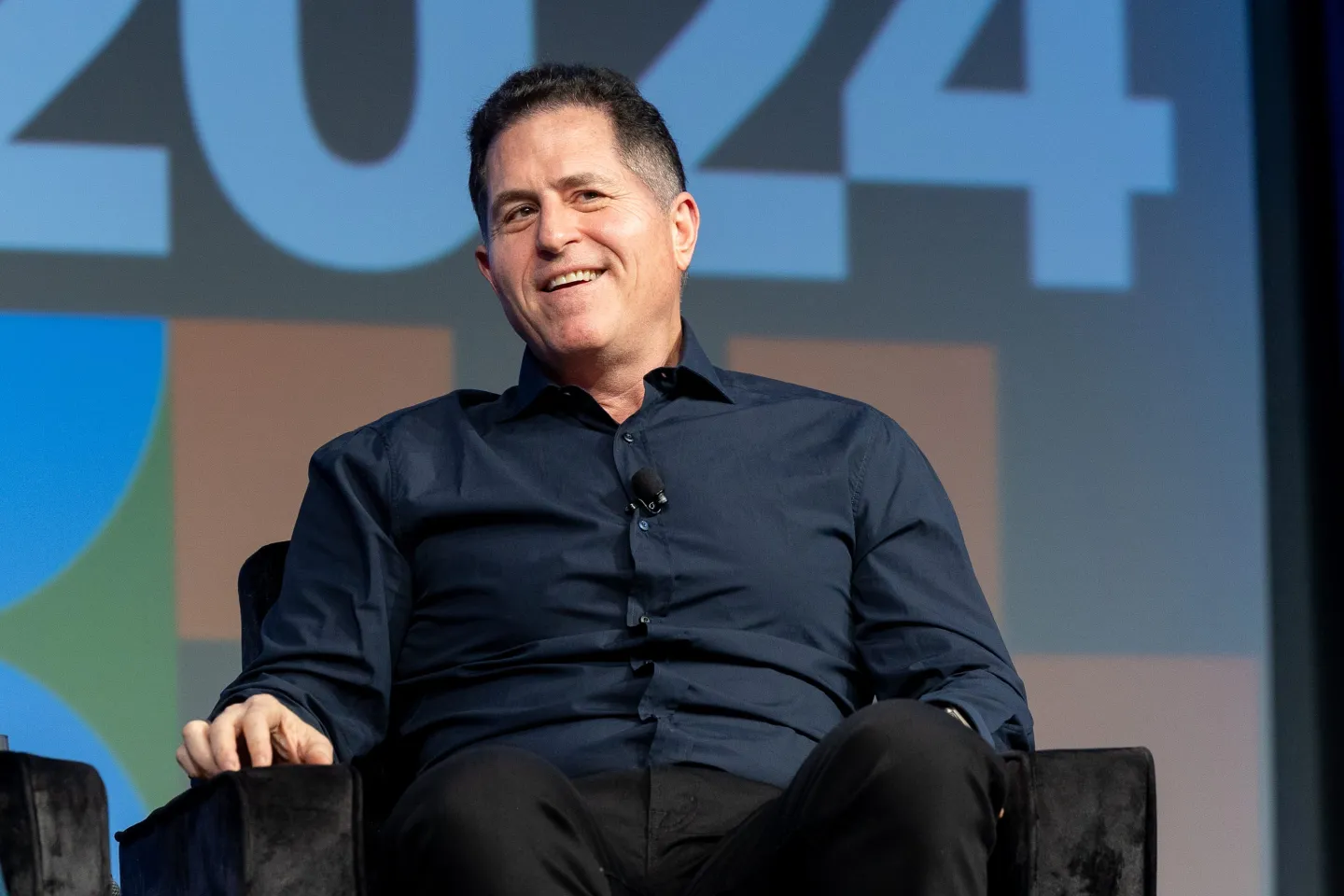
Michael Dell, the billionaire founder of Dell Technologies, has announced one of the largest philanthropic contributions in recent American history: a $6.25 billion donation dedicated to funding “Invest America” accounts for 25 million children across the United States. In rare, candid remarks about his motivations, Dell emphasized that the initiative is not merely charitable—but structural, aimed at reshaping long-term economic opportunity for the next generation.
The donation immediately positions him among the most influential active philanthropists in the country, with a focus on addressing wealth inequality at its source: the absence of early-life capital and financial security for millions of American families.
A Vision Rooted in Economic Mobility
The Invest America program is built on a simple but powerful concept:
every child deserves a financial foundation by the time they reach adulthood.
Dell’s contribution will help fund publicly backed savings and investment accounts for children, with the aim of:
- Building long-term wealth
- Supporting future education or vocational needs
- Reducing intergenerational poverty
- Increasing financial literacy
- Narrowing the wealth gap, particularly for low-income households
Dell described the program as a “21st-century modernization of the American Dream,” arguing that economic mobility cannot depend solely on individual circumstances or ZIP codes.
The Scale of the Donation—and What It Enables
At $6.25 billion, the donation is among the largest philanthropic commitments ever made by a living donor. It is structured to:
- Establish or seed Invest America accounts for 25 million children
- Operate on a blended public–private model
- Ensure children receive meaningful capital at adulthood
- Support ongoing contributions from families, employers, and government programs
If invested over 18 years in diversified portfolios, even modest annual returns could grow these accounts substantially by the time each child reaches adulthood.
The program draws inspiration from “baby bonds,” a concept long discussed by policymakers but rarely funded at scale. Dell’s contribution may become the catalyst needed to normalize early-life capital creation nationwide.
Why Dell Stepped Forward: Personal and Economic Reflections
In his comments, Dell spoke openly about the broader societal landscape that influenced his decision:
1. The widening wealth gap
He noted that economic inequality is reaching levels that threaten both social cohesion and national competitiveness.
2. The declining affordability of education
With student debt burdens soaring, Dell sees early-life savings as a crucial foundation.
3. The desire to strengthen long-term economic resilience
A well-capitalized generation, he argues, will be more capable of starting businesses, investing in skills, and participating fully in the modern economy.
4. The belief that philanthropy should be systemic
“Charity alone doesn’t change systems,” Dell said. “Investing early does.”
His remarks reflect a shift in modern philanthropy toward structural solutions rather than symbolic donations.
How Invest America Accounts Work
The program operates through a multi-phase structure:
Phase 1 — Initial Funding
Children receive seed capital funded through Dell’s donation and public matching contributions.
Phase 2 — Growth Through Investment
Funds are invested in regulated, diversified portfolios to compound over time.
Phase 3 — Education, Entrepreneurship, and Wealth-Building
At adulthood, funds can be used for:
- Higher education
- Training or certification programs
- Starting a business
- Buying a home
- Long-term savings or retirement
Restrictions prevent early misuse while encouraging long-term economic decision-making.
The Policy Landscape: A National Debate Accelerated
Dell’s donation arrives at a pivotal moment in U.S. policy discussions:
- Several states are exploring child savings accounts
- Economists are studying baby bond proposals
- Policymakers are examining how generational wealth gaps undermine economic growth
Dell’s contribution may give political momentum to broader federal or state-level initiatives, providing a real-world demonstration that large-scale child capital programs are feasible and impactful.
Philanthropy Meets Public Policy
Experts note that this donation could fundamentally reshape expectations for high-net-worth philanthropy in the U.S. Unlike traditional charitable spending on education, health, or social programs, Dell’s approach:
- Directly allocates capital to families
- Builds assets rather than services
- Encourages public–private partnership
- Reduces dependency on government aid
- Emphasizes empowerment over intervention
It echoes the growing movement toward “asset-based anti-poverty strategies,” which research shows can dramatically improve lifetime outcomes.
Long-Term Impact: A More Equitable Economic Future
If the program scales nationally, the potential outcomes include:
• Higher college enrollment and completion rates
Students with savings—even small amounts—are more likely to pursue higher education.
• Increased entrepreneurship
Access to early capital dramatically increases the likelihood of starting small businesses.
• Greater homeownership
Early-life savings reduce mortgage barriers and create long-term wealth.
• Reduced generational poverty
Baby bond–style accounts are one of the most effective anti-poverty tools studied in modern economics.
• Narrowed racial wealth gaps
Research suggests targeted child capital programs could significantly reduce structural disparities.
A Turning Point for American Philanthropy
Michael Dell’s donation is more than an act of generosity—it is a broader challenge to how society invests in its young people and allocates resources for long-term prosperity.
By backing a program that directly builds wealth for millions of future adults, Dell is helping redefine what large-scale philanthropy can achieve:
not charity, but generational transformation.
As the Invest America initiative rolls out in the coming years, it may prove to be one of the defining experiments in American economic development and child opportunity in the 21st century.
