

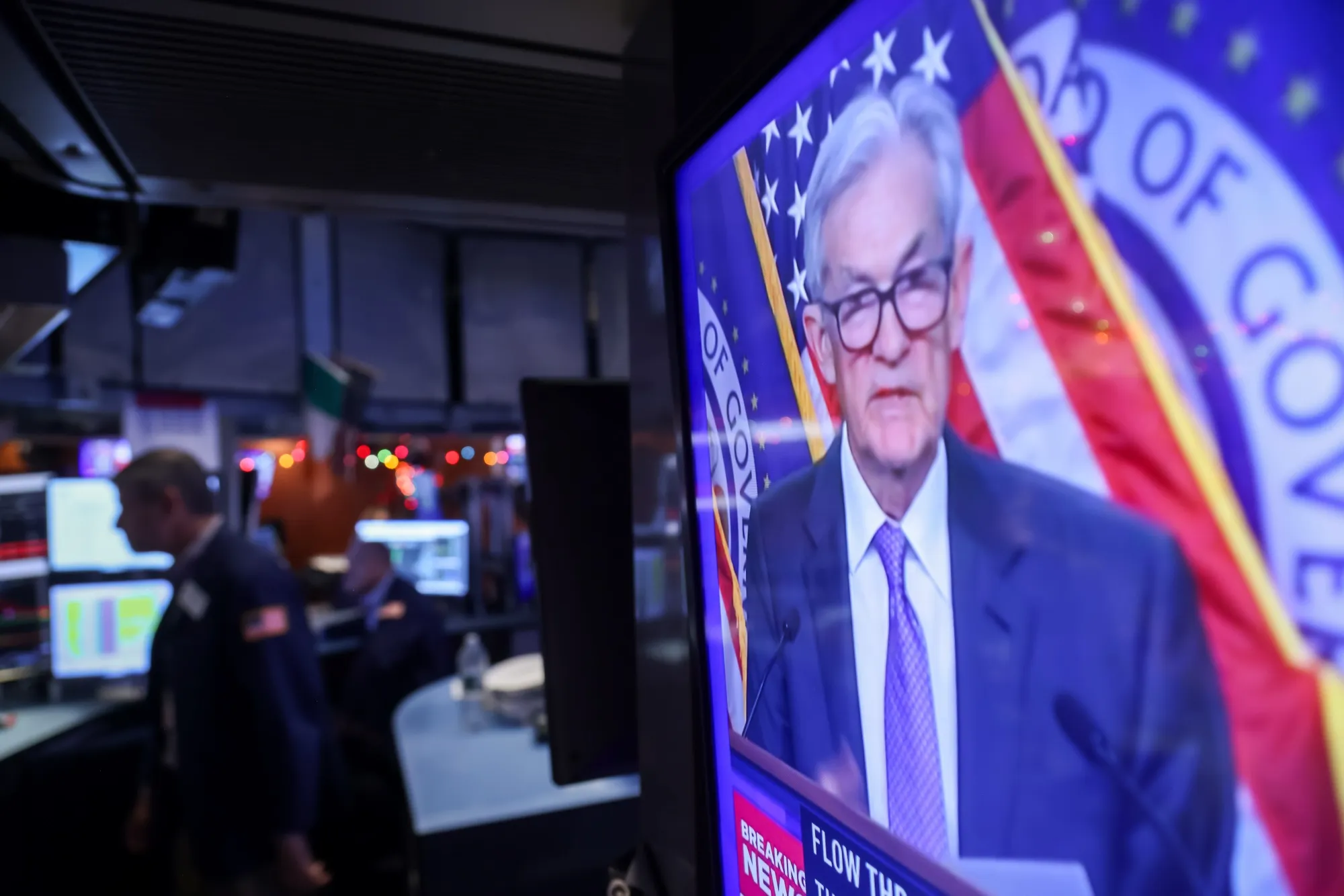
The recent surge in technology stocks, particularly those tethered to the artificial intelligence boom, has ignited a familiar unease across Wall Street. Even with the Federal Reserve’s recent pivot towards a more accommodative stance, signaling potential interest rate cuts that typically buoy markets, a persistent anxiety about an impending AI bubble continues to ripple through investment circles. This isn’t just a fringe concern; it’s a topic whispered in boardrooms and debated on financial news channels, a phantom limb ache from past market excesses.
Much of this apprehension stems from the astronomical valuations of companies like Nvidia, whose graphics processing units (GPUs) are the bedrock of AI development. Nvidia’s market capitalization has soared, placing it among the world’s most valuable companies, a trajectory that evokes memories of the dot-com era. Critics point to the disconnect between these valuations and traditional metrics, suggesting that much of the growth is speculative, driven by hype rather than fundamental earnings. They argue that while AI’s potential is undeniable, the current market frenzy might be overestimating the immediate profitability and widespread adoption of these technologies, creating a scenario ripe for a painful correction.
Yet, proponents of the current AI rally offer a counter-narrative, emphasizing the transformative power of the technology. They highlight that unlike the largely conceptual internet companies of the late 1990s, today’s AI firms are generating substantial revenues and profits, with tangible products and services already integrated into various industries. Cloud computing giants like Microsoft and Amazon, for instance, are investing heavily in AI infrastructure, seeing it as a crucial competitive advantage. This perspective suggests that the market is simply pricing in a paradigm shift, a genuine technological revolution that will reshape economies and societies on an unprecedented scale.
The Federal Reserve’s role in this dynamic is complex. Historically, lower interest rates tend to make future earnings more attractive, encouraging investment in growth-oriented sectors like technology. By signaling potential cuts, Chairman Jerome Powell and the Fed aim to provide a more favorable economic environment, one that generally supports higher asset prices. However, this very support can inadvertently fuel speculative behavior, as investors, seeking higher returns in a low-yield environment, might be more inclined to chase high-growth, high-risk assets. This creates a delicate balance for policymakers, who must navigate between supporting economic growth and preventing overheating in asset markets.
Veteran investors, those who weathered the dot-com bust and the 2008 financial crisis, are particularly vocal in their warnings. They understand that while innovation is vital, market psychology can often decouple from reality. The fear isn’t that AI itself is a mirage, but that the market’s enthusiasm for it has become untethered from sustainable business models and realistic growth projections. The risk, they contend, lies in a scenario where the initial promise of AI outpaces its actual implementation and profitability, leading to a sharp downturn for those who bought in at the peak.
Ultimately, the debate over an AI bubble reflects a deeper tension between optimism for technological progress and the inherent caution of financial markets. While the Fed’s actions may offer a supportive backdrop, the specter of past speculative manias continues to loom large. Investors are left to weigh the genuine potential of artificial intelligence against the historical tendency of markets to overreact, a balancing act that will define the coming months and years for the global economy.
