

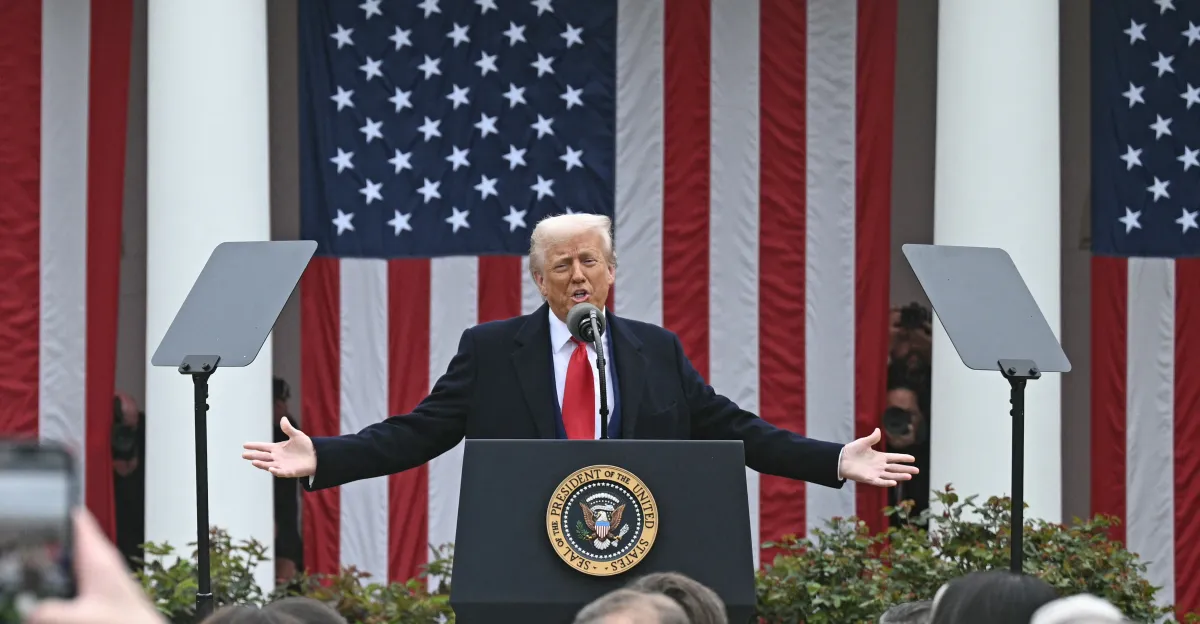
The United States Supreme Court is poised to deliver a significant ruling that could redefine the scope of presidential authority in trade policy. At the heart of the matter are the sweeping global tariffs implemented by President Donald Trump, a decision that has reverberated through international markets and diplomatic relations. The nine justices, including Sonia Sotomayor, Clarence Thomas, Chief Justice John Roberts, Samuel Alito, Elena Kagan, Amy Coney Barrett, Neil Gorsuch, Brett Kavanaugh, and Ketanji Brown Jackson, have been meticulously examining the legal foundations of these levies. Their decision, anticipated as early as January, carries implications far beyond the specific tariffs in question, potentially setting precedents for how future administrations can wield economic power on the global stage.
The central question before the high court revolves around whether the executive branch overstepped its statutory authority when imposing these tariffs. Critics have argued that the measures, enacted under national security pretexts, stretched existing trade laws beyond their original intent. Proponents, conversely, maintain that the president requires broad discretion to protect domestic industries and national interests. This legal battle is not merely a retrospective look at a past administration’s policies but a forward-looking examination of the checks and balances inherent in American governance. Should the Court find that the tariffs exceeded presidential powers, it could force future administrations to seek more explicit congressional approval for similar trade actions.
The potential for a Supreme Court rejection of the legal basis for these tariffs has prompted discussions within the White House regarding alternative legal avenues. If the Court were to strike down the current justification, the administration might explore other existing laws to support similar levies, attempting to navigate a complex web of international trade agreements and domestic statutes. This strategic contingency planning underscores the profound impact the Court’s ruling could have on trade policy formulation. It highlights a recognition that the legal landscape for presidential trade actions is fluid and subject to judicial interpretation, particularly when those actions have such widespread economic consequences.
The case has drawn considerable attention from various sectors, including manufacturers, importers, and consumer groups, all of whom have a vested interest in the predictability and legality of trade policy. Businesses have had to adapt to the fluctuating costs and market uncertainties introduced by the tariffs, making the Supreme Court’s impending decision a critical factor in their future planning. A ruling upholding the tariffs would validate a more expansive interpretation of presidential trade authority, potentially encouraging future administrations to employ similar tactics. Conversely, a decision curtailing such powers would likely be seen as a victory for those advocating for a more collaborative approach to trade, one that emphasizes congressional involvement and adherence to established international norms.
The composition of the Court, with its diverse ideological perspectives, adds another layer of complexity to predicting the outcome. The justices, from Chief Justice John Roberts to the more recently appointed Ketanji Brown Jackson, will likely deliberate on the nuances of legislative intent and constitutional limits. Their collective wisdom will determine whether the executive branch’s capacity to unilaterally impose trade restrictions will remain largely unfettered or be subjected to stricter legal scrutiny. Regardless of the specific outcome, the Supreme Court’s pronouncement on Donald Trump’s tariffs will undoubtedly leave an indelible mark on the balance of power concerning international trade, echoing through future presidencies and global economic interactions.
