

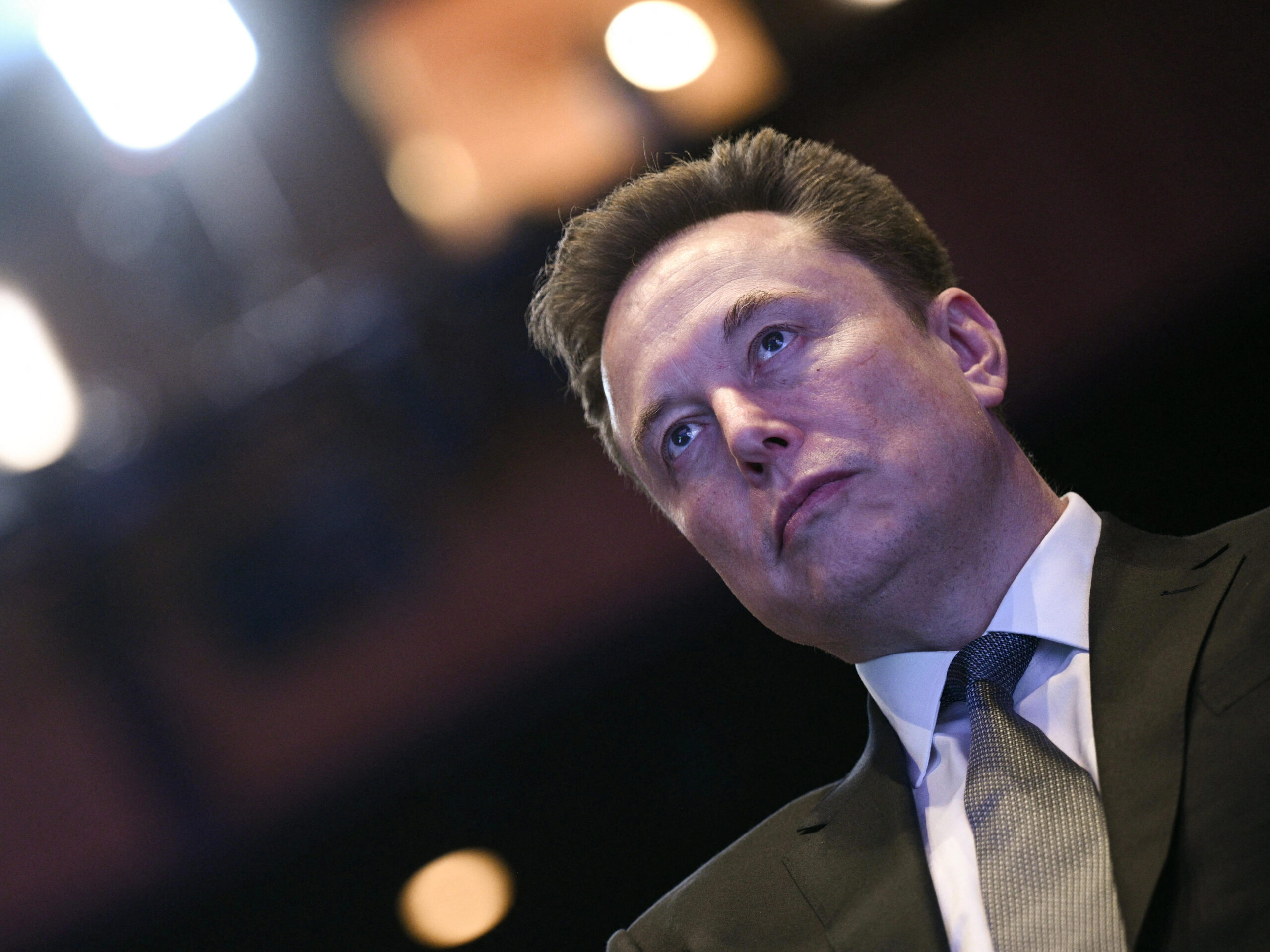
Elon Musk has never shied away from bold predictions, but his latest warning about the U.S. national debt—now nearing $38 trillion—is among his starkest yet. According to Musk, the fiscal crisis looming over the United States is so severe that only artificial intelligence and robotics can generate the productivity explosion necessary to stabilize the nation’s long-term finances.
But Musk also cautions that the same technologies capable of saving the economy could unleash “significant deflation,”disrupting traditional economic models and potentially reshaping global markets. His comment reflects a deeper debate unfolding among economists, technologists, and policymakers: Can exponential technological productivity solve the debt crisis, or will it create new macroeconomic challenges in the process?
America’s debt burdens, demographic realities, and slowing labor productivity collide with Musk’s projection of a hyper-automated future—a world where machines, not humans, power economic growth. Understanding this tension is central to evaluating whether AI could truly rescue the U.S. from a debt trajectory many experts increasingly consider unsustainable.
The $38 Trillion Problem: America’s Debt Spiral Is Accelerating
The U.S. national debt has surged to unprecedented levels, driven by:
- high federal spending
- rising interest costs
- aging demographics
- structurally lower tax revenue relative to obligations
- spiraling entitlement and healthcare commitments
As interest rates rise, the cost of servicing the debt becomes an even larger share of the federal budget. By some estimates, interest payments alone could exceed defense spending within the decade.
This trajectory is unsustainable under traditional models of economic growth, taxation, and productivity. That is why Musk argues the country must pursue a radical leap in productivity—not incremental improvement.
Musk’s Thesis: Only AI and Robotics Can Generate the Productivity Surge Needed
Musk’s argument is grounded in a simple but powerful macroeconomic proposition:
1. Human productivity is slowing
U.S. labor productivity growth has been sluggish for two decades, weighing on GDP growth and tax revenue.
2. Demographics are deteriorating
An aging workforce and lower birth rates mean fewer working-age Americans supporting more retirees.
3. Traditional economic reforms are insufficient
Budget cuts, tax reform, immigration adjustments, or entitlement restructuring alone cannot close the long-term fiscal gap.
4. AI and robotics can create a step-change in productivity
According to Musk, only automation can deliver the kind of exponential output needed to offset rising debt obligations.
His view aligns loosely with the argument that technology-driven productivity is the only lever big enough to avoid future austerity.
How AI and Robotics Could Reduce the Debt Burden
1. Explosive productivity growth
AI-driven automation can:
- reduce labor costs
- accelerate output
- optimize supply chains
- reduce inefficiencies
- create new high-value industries
This would increase GDP and tax revenue without increasing population or inflation.
2. Expansion of the economic base
Automation could enable new sectors—autonomous transportation, decentralized energy, biotech R&D, robotics manufacturing, and personalized AI services—adding trillions in economic value.
3. Reduced government spending
Robotics could lower cost pressures in:
- healthcare
- eldercare
- defense
- infrastructure
- logistics and government services
With lower baseline costs, debt-servicing becomes more manageable.
4. Increased corporate profits and capital formation
A more productive corporate sector boosts federal tax receipts.
Collectively, these forces could help slow the growth of the debt or even reverse it.
But the Trade-Off: AI-Induced Deflation Could Disrupt Everything
Musk’s warning about “significant deflation” is a serious macroeconomic consideration.
Deflation is historically destabilizing
Deflation can lead to:
- falling prices
- lower wages
- reduced investment
- debt defaults
- economic stagnation
The Great Depression is the most famous example of deflation destroying economic activity.
Why AI creates deflationary pressure
AI and robotics could:
- eliminate millions of jobs
- reduce the cost of goods and services
- compress wages
- disrupt entire industries
- create a productivity glut relative to demand
This would push prices downward across the economy.
A paradox emerges
AI is needed to solve the debt crisis—but the deflation that AI creates could:
- erode tax revenue
- shrink nominal GDP
- make the existing debt more burdensome
- hurt borrowers (including the government)
This is the “AI Deflation Trap” economists are beginning to analyze.
A Post-Scarcity Economy or a Fiscal Emergency?
Musk’s comments align with a broader philosophical vision:
AI and robotics will eventually produce a post-scarcity society where goods and services are abundant and cheap.
But transitioning to that future risks triggering economic instability, unemployment, and severe fiscal mismatches.
The government, still operating under traditional debt dynamics, may find its revenue base shrinking just as demand for social assistance rises due to workforce displacement.
Without a new economic model, this mismatch could worsen the debt problem AI is supposed to solve.
Three Possible Futures for the U.S. Debt and AI Economy
1. The Optimistic Scenario — AI Saves the Economy
- Productivity surges
- GDP accelerates
- Government revenue rises
- Costs fall
- Debt becomes manageable
This outcome assumes political stability, effective regulation, and widespread workforce retraining.
2. The Deflationary Crunch Scenario — AI Deepens the Crisis
- Prices fall
- Wages compress
- Tax revenue declines
- Debt becomes heavier
- Social instability rises
This is the scenario Musk hints at when warning of “significant deflation.”
3. The Hybrid Scenario — AI Forces a New Fiscal Paradigm
This scenario involves:
- new forms of taxation (robot tax, data tax, AI productivity tax)
- new social models (UBI, wage subsidies, transition income)
- new economic frameworks (post-labor economies)
AI becomes both a threat and a saving grace—forcing the U.S. to reinvent its fiscal system.
Is Musk Right? The Debate Among Economists
Many economists agree with Musk that:
- automation can solve the productivity stagnation
- debt dynamics require exponential growth
- demographics require new productivity sources
But they warn that:
- relying solely on automation creates volatility
- deflation can undermine debt sustainability
- workforce displacement can depress aggregate demand
- social and political resistance may slow adoption
In short: AI may solve the debt crisis but could break the current economic model in the process.
Conclusion: Musk’s Warning Is Both Technological and Macro-Fiscal
Elon Musk’s statement that only AI and robotics can address America’s $38 trillion debt is not simply a futuristic prediction—it is a recognition that the current economic trajectory is untenable. But his added warning about “significant deflation” reveals the deeper paradox: the very technology needed to rescue the economy could destabilize the systems that sustain it.
AI and robotics may indeed be the only engines powerful enough to generate the growth necessary to avert a fiscal crisis. Yet without new policies, new safety nets, and a new economic framework, the deflationary shock created by hyper-efficiency could overwhelm existing institutions.
The U.S. must therefore prepare not only for an AI-driven productivity boom—but for the economic transformation it will require. The debt crisis will not be solved by technology alone. It will be solved by how society adapts to the consequences of that technology.
