

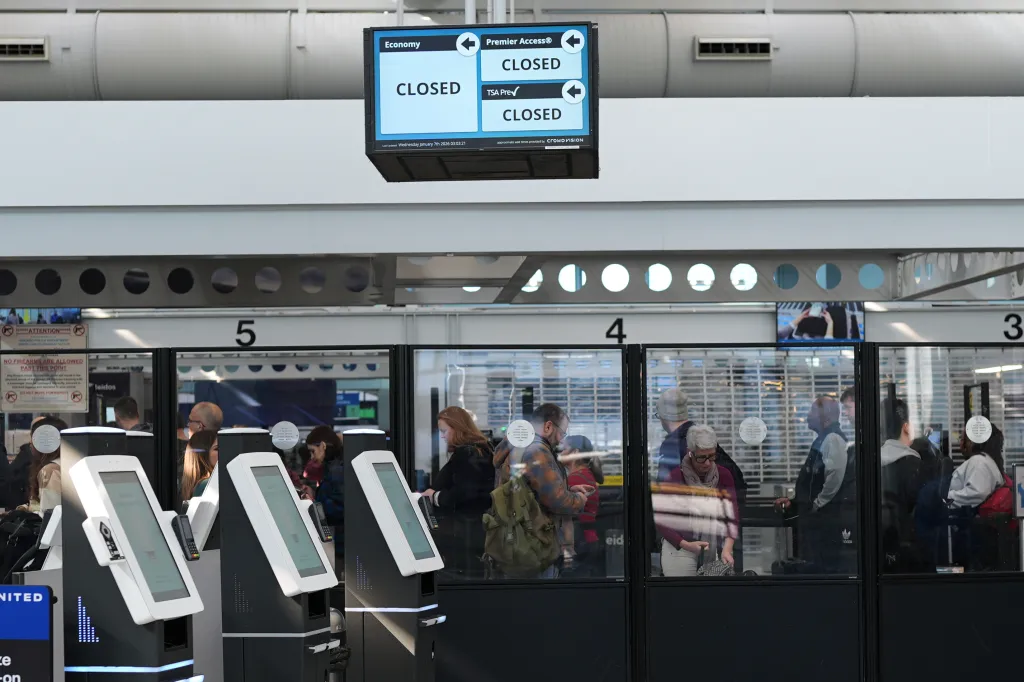
The federal government entered a partial shutdown this past Saturday, a direct consequence of an intractable dispute between congressional Democrats and the Trump administration concerning oversight of federal immigration operations. With Congress now in recess until February 23, both sides appear deeply entrenched in their positions, leaving numerous federal agencies in limbo and thousands of employees facing missed paychecks. This impasse centers on Democratic demands for reforms to how federal immigration officers conduct their duties, particularly in the wake of the fatal shootings of U.S. citizens Alex Pretti and Renee Good in Minneapolis last month.
Democrats are advocating for several key changes, including requirements for federal officers to clearly identify themselves, remove masks during operations, and display unique identification numbers. They also seek to mandate body cameras for immigration agents and require judicial warrants for arrests executed on private property. Senate Minority Leader Chuck Schumer underscored the Democrats’ stance, arguing that these proposals align with standard practices already observed by law enforcement agencies across the country. He questioned why Republicans would resist what he termed “common sense proposals,” suggesting they are not extreme but rather reflective of established police protocols.
However, the White House has largely rejected these demands. Tom Homan, the White House border czar, stated the administration’s unwillingness to concede on issues like mask removal and clear identification, citing the need for officers to protect themselves. While acknowledging his personal dislike for masks, Homan emphasized the safety concerns of those on the front lines. Republican Senator Markwayne Mullin expressed a willingness to consider equipping officers with body cameras and strengthening training, but he drew a firm line at proposals requiring officers to remove masks or disclose their identities, citing concerns about doxing and harassment faced by agents involved in immigration enforcement. Mullin questioned the intent behind such demands, suggesting they could be used to intimidate officers and their families, stressing the administration’s desire for U.S. Immigration and Customs Enforcement (ICE) to operate effectively with cooperation from local authorities.
This shutdown specifically impacts departments such as the Transportation Security Administration, the Federal Emergency Management Agency, the U.S. Coast Guard, the Secret Service, and both U.S. Immigration and Customs Enforcement (ICE) and U.S. Customs and Border Protection (CBP). Despite the broader government closure, a significant portion—approximately 90%—of Department of Homeland Security (DHS) employees are expected to continue working, albeit without immediate pay. This situation echoes last year’s record 43-day government shutdown, raising concerns about potential financial hardships for federal workers. Notably, operations at ICE and CBP are largely unimpeded due to increased funding from a 2025 tax and spending cut law, which provides billions more for deportation efforts.
The Trump administration’s unwavering stance on immigration enforcement remains a central theme, reflecting President Trump’s 2024 campaign promise to aggressively detain and deport individuals living in the country without legal permission. Since his return to office last year, DHS reports over 675,000 migrants have been deported, with an additional 2.2 million reportedly “self-deporting” as a result of the intensified crackdown. Senator Katie Britt, an Alabama Republican and staunch Trump ally, criticized Democrats for walking away from negotiations and highlighted the administration’s commitment to border security and interior enforcement, framing it as a mandate from the American people. This deep ideological chasm, compounded by the immediate humanitarian concerns surrounding officer conduct, leaves little room for optimism regarding a swift resolution to the current funding impasse.
