

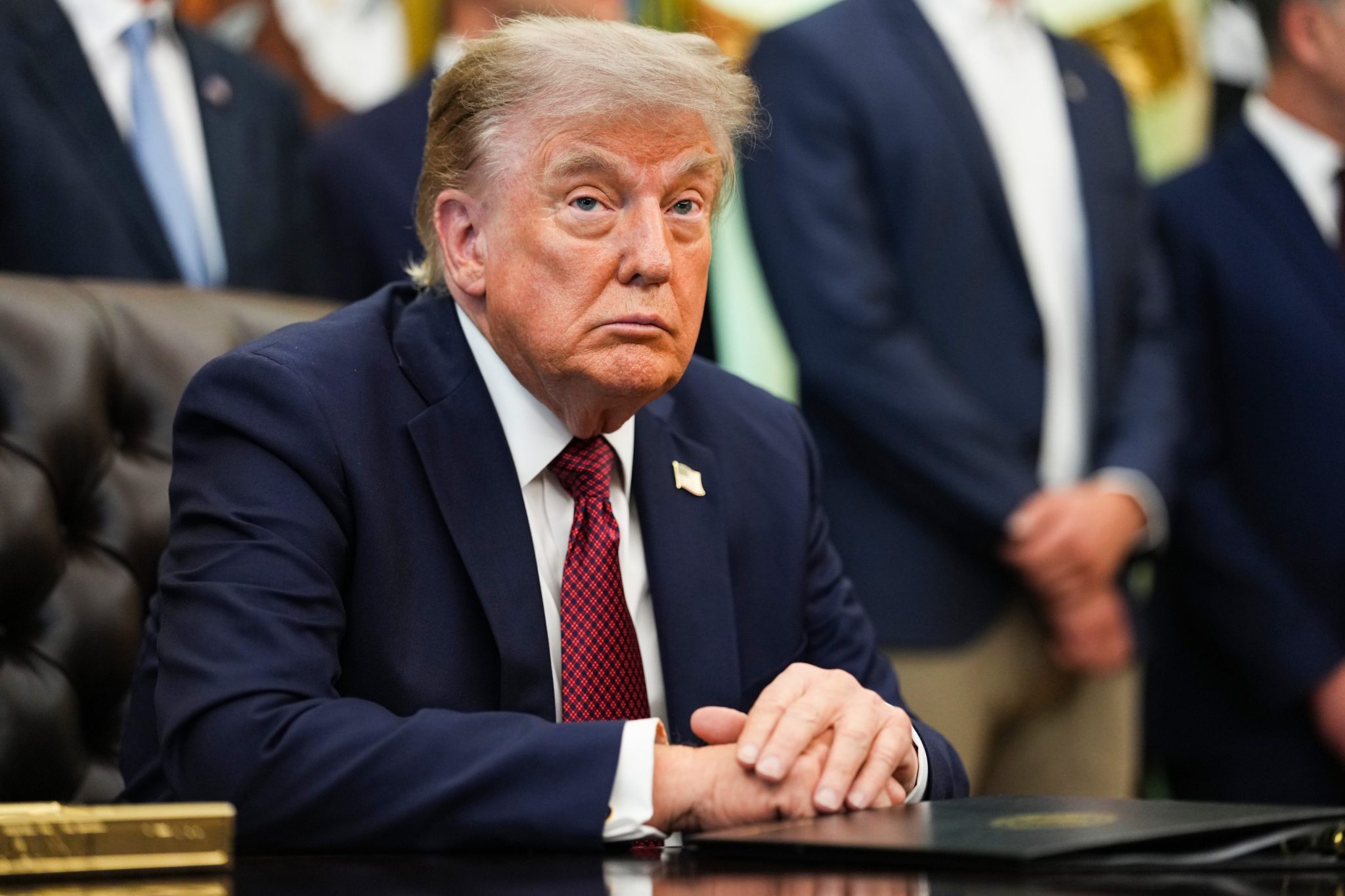
The Federal Open Market Committee is once again poised to hold, or potentially increase, interest rates this week, a decision that runs counter to President Trump’s consistent calls for lower borrowing costs. Central bank chairman Kevin Warsh and the FOMC are meeting to assess progress toward their dual mandates of maximum employment and 2% inflation, a target that has proven elusive in recent years. With inflation currently standing at 3.5%, down slightly from May to June but still elevated compared to the beginning of the year, the committee faces persistent challenges.
A significant contributor to this sustained inflation has been the rise in fuel prices, which surged 15.7% over the past year. Although there has been a recent dip of 4.9% from May to June, prices remain high, largely a consequence of ongoing geopolitical tensions in the Middle East. The unresolved situation between Washington and Tehran, particularly concerning control of the Strait of Hormuz, a critical global oil shipping lane, continues to choke supply. While active military conflict has paused, no formal ceasefire has been declared, leaving the region in a state of fragile diplomacy. This foreign policy dynamic, initiated by the Trump administration, is now directly influencing the Federal Reserve’s monetary policy considerations.
Wall Street analysts had already signaled at the start of the week that Trump’s foreign policy initiatives were effectively impeding Warsh’s path to a rate cut. Bank of America’s chief U.S. economist, Aditya Bhave, and his team, for instance, project a hold for the current month. They noted the challenging position Warsh finds himself in: “With markets now pricing nearly 10 basis points of hikes in July, Chair Warsh faces a difficult choice. Not hiking could challenge the Fed’s credibility on inflation. But raising rates would go against his framework of looking through supply shocks.” Bhave’s team anticipates three 25-basis-point hikes later in the year, in September, October, and December, suggesting a sustained period of tighter monetary policy.
The credibility of Chairman Warsh and, by extension, the Federal Reserve, remains a central point of scrutiny. Following President Trump’s unprecedented criticism of Warsh’s predecessor, Jerome Powell, observers questioned whether the new chairman would align with the administration’s desire for lower rates, even if economic data suggested otherwise. To date, Warsh has not capitulated to these political pressures. However, a reluctance to implement appropriate rate hikes could equally undermine the central bank’s independence and its commitment to price stability.
Warsh has maintained his characteristic discretion, avoiding forward guidance, a stance that some other policymakers have used to more forcefully articulate their concerns. Gregory Daco, chief economist at EY-Parthenon, highlighted this dynamic, stating, “Chair Warsh’s communication void has encouraged other policymakers to speak more forcefully.” Daco noted that these voices have converged around a clear position: continued patience with elevated inflation is wearing thin. If inflation does not soon return to the 2% target, particularly due to persistent supply shocks, increased demand linked to artificial intelligence, tariffs, or the Middle East conflict, the argument for further policy tightening will become undeniable.
The market generally aligns with the expectation of a hold. Data from CME’s FedWatch barometer, which tracks 30-Day Fed Funds futures prices, indicates that 68.5% of interest rate traders anticipate no change at this week’s meeting. The remaining traders largely expect a 25-basis-point hike, pushing the federal funds rate to a range of 3.75% to 4%. This consensus underscores the prevailing view that current economic conditions and geopolitical realities make a rate cut unlikely, despite the political pressures emanating from the White House.
