

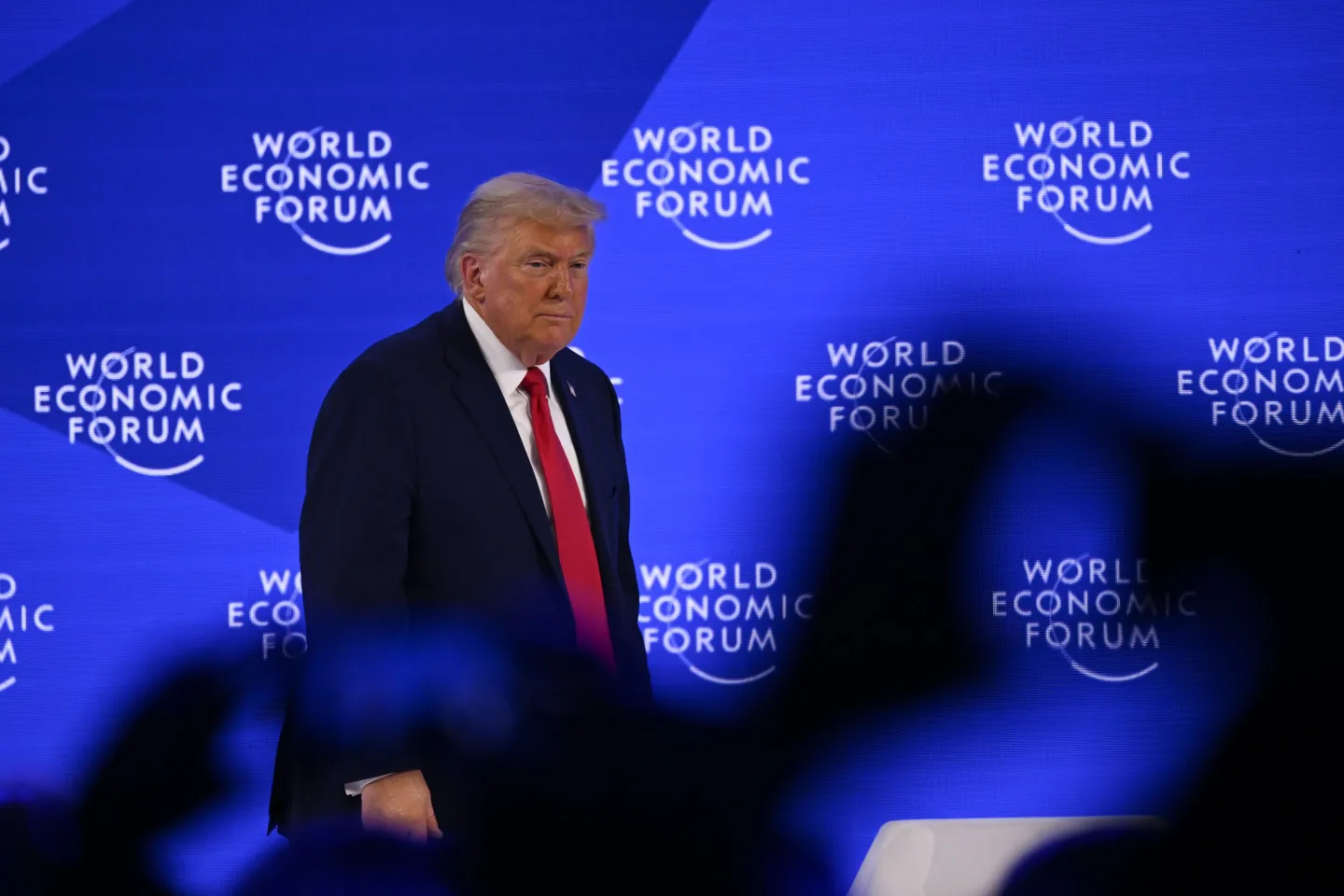
During his address at the World Economic Forum in Davos, Switzerland, Donald Trump presented a historical overview of Greenland’s significance to American security, expressing regret over the United States’ decision to return the Arctic island to Denmark following World War II. He emphasized that the time has come to reconsider the territory’s status, though he clarified that any acquisition would not involve military force for what he termed a “big beautiful piece of ice.” This perspective was central to his remarks, framing Greenland as a critical, yet often misunderstood, American asset.
Trump recounted that during World War II, American forces were deployed to Greenland after Denmark’s swift defeat by Nazi Germany. He asserted that these troops “saved Greenland” and successfully thwarted enemy attempts to establish a foothold in the Western Hemisphere. Following the war, recounting history through his own lens, Washington returned Greenland to Denmark, a decision Trump characterized in stark terms. He questioned the wisdom of this choice, asking, “How stupid were we to do that?” and adding, “But we did it, we gave it back. But how ungrateful are they now?” This historical narrative underpinned his argument for revisiting the island’s ownership.
The former president has consistently positioned Greenland as a vital national security interest for the United States, viewing it as a strategic buffer against potential threats from Russia and China. During his speech, he downplayed the island’s much-discussed mineral wealth, including rare earths, as a secondary concern. Instead, he argued that Greenland’s geographical location alone renders it indispensable to U.S. interests, tying this stance to a longstanding American doctrine of preventing external threats from establishing a presence in the hemisphere. He also contended that American presidents have sought to purchase Greenland for nearly two centuries, a claim that historical records only partially support. While there is evidence of U.S. interest in the Arctic and territorial expansion in the late 19th century, including President Truman’s 1946 offer of $100 million in gold to Denmark for Greenland, there isn’t a continuous record of formal presidential efforts spanning two centuries.
In further support of his position, Trump criticized Denmark’s 2019 pledge to enhance Greenland’s defenses as insufficient. He noted that Copenhagen had promised over $200 million but, according to him, had spent less than one percent of that amount. “There’s no sign of Denmark there,” he claimed, while simultaneously expressing “tremendous respect” for both Danish and Greenlandic people. However, analysis from a Danish telecom and policy consultancy indicates that by mid-2024, approximately one percent of the roughly $224 million Danish pledge had been spent, with some projects encountering delays. Despite this, Denmark has since committed considerably larger Arctic defense packages, approving multibillion-kroner programs in 2024 and 2025 for Arctic vessels, drones, satellites, and personnel specifically allocated to Greenland and the broader Arctic region.
Beyond financial commitments, Denmark maintains a visible presence on the island. The Joint Arctic Command, headquartered in Greenland’s capital, Nuuk, is operated by Denmark, which also deploys patrol vessels, conducts air surveillance, and stations military personnel in and around Greenland. Even prior to these new defense packages, Danish naval patrols, inspection vessels, and other assets routinely operated in Greenlandic waters, with further ships, drones, and infrastructure upgrades having been funded or announced in recent years.
Perhaps the most notable aspect of Trump’s address was his direct response to concerns that his pursuit of Greenland might escalate into conflict. In an apparent effort to alleviate anxieties, he assured the audience that he would not resort to military force. “We never asked for anything, and we never got anything. We probably won’t get anything unless I decide to use excessive strength and force … but I won’t do that. I don’t want to use force. I won’t use force,” Trump stated. This clarification addressed lingering questions about the use of military force, which had not been entirely ruled out by the White House previously, with senior administration officials having told reporters that the U.S. military was “always an option.” That earlier ambiguity had fueled apprehension among allies, global markets, and lawmakers. Despite these assurances, concern over Trump’s position on Greenland is expected to persist. Danish Prime Minister Mette Frederiksen has consistently rejected any notion of selling Greenland, urging Washington to respect existing partnerships, while European leaders have emphasized that territorial claims cannot be negotiated away under duress. Members of Congress from both parties have also distanced themselves from Trump’s rhetoric, stressing that Greenland is a partner and that any discussions about territory must uphold self-determination and international law.
