

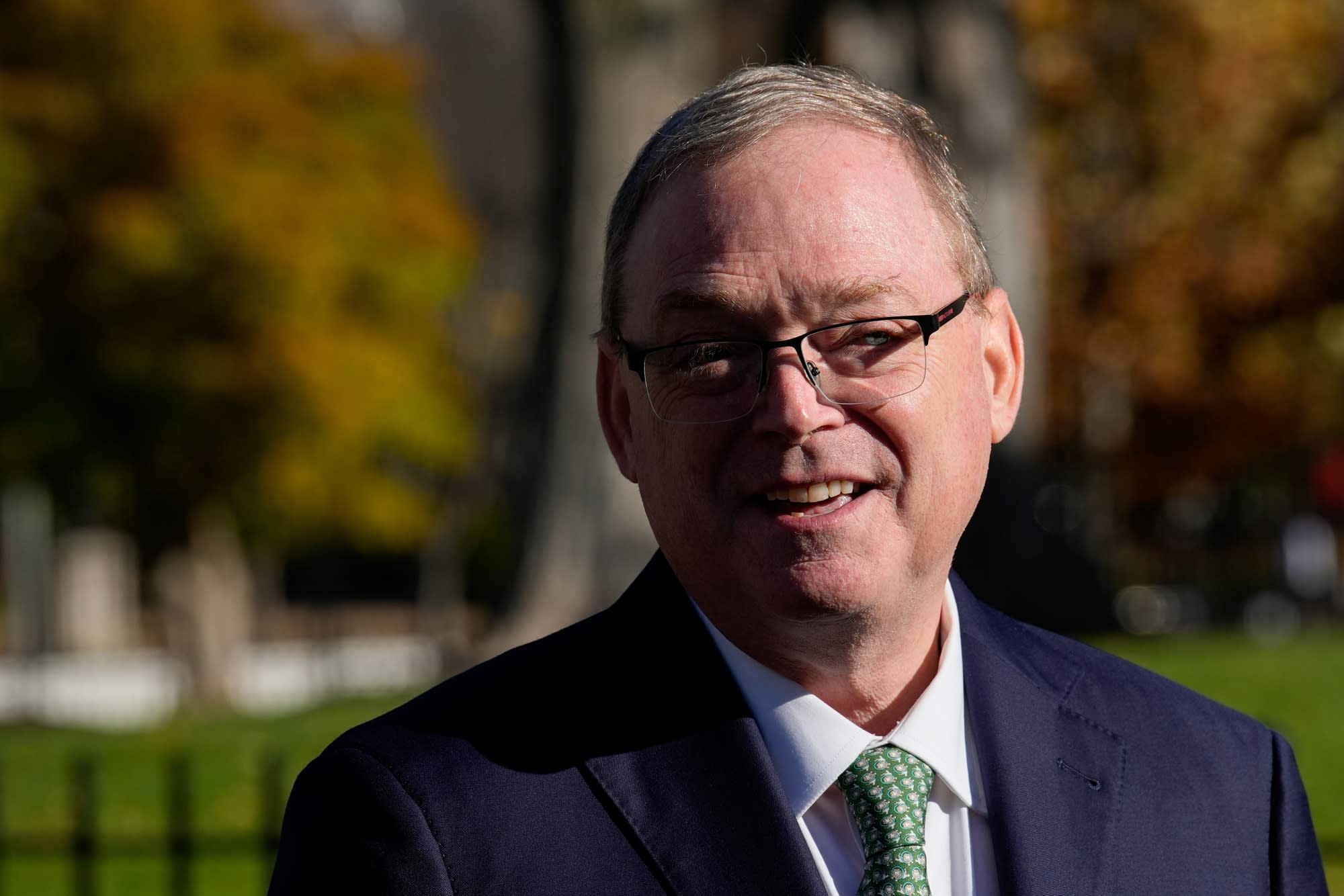
The race for the next Federal Reserve chair has taken a curious turn, with President Donald Trump’s preferred candidates navigating the delicate balance between presidential deference and central bank independence. Kevin Hassett, a leading contender and former National Economic Council Director, recently offered a glimpse into this dynamic, stating he would be “happy to talk to the president every day” if appointed, yet firmly asserting that Trump’s opinions would ultimately carry “no weight” within the rate-setting Federal Open Market Committee (FOMC). This distinction highlights the inherent tension between a president who believes his financial acumen should influence monetary policy and a central bank traditionally insulated from political pressures.
Trump, never shy about his views on interest rates, made it clear last Friday that his voice “should be heard” because “I’ve made a lot of money.” Such pronouncements often rattle markets and raise eyebrows among economists who champion the Fed’s autonomy. Hassett, a staunch economic surrogate for Trump, acknowledged the president holds “very strong and well-founded views.” However, he quickly pivoted to emphasize the Fed’s independent structure, stressing that the chairman’s role is to build consensus among FOMC members, not to rubber-stamp presidential directives. When pressed on the direct influence of Trump’s voice, Hassett was unequivocal: “no, he would have no weight.” He elaborated that while a president’s argument might be presented to the committee if it’s “good” and “based on data,” the ultimate decision rests with the voting members.
This nuanced position comes as the political winds shift around the Fed chairmanship. Wall Street initially viewed Hassett as the clear frontrunner, with prediction markets like Kalshi assigning him an 80.6% probability earlier this month. However, a recent Wall Street Journal report quoting Trump placing former Fed Governor Kevin Warsh “at the top of his list,” caused Hassett’s odds to plummet to 50%, while Warsh’s surged to 41%. Trump reportedly met with Warsh recently, pressing him on his willingness to back rate cuts – a clear indication of the president’s priorities for the next Fed chief. The president’s casual remark, “the two Kevins are great,” underscores the fluid nature of his decision-making process, keeping both contenders on their toes as they vie for the powerful position.
Hassett’s track record, particularly during his tenure in Trump’s second administration, has drawn criticism from some former colleagues. They point to his frequent cable news appearances defending Trump’s economic policies, often downplaying unfavorable data and echoing White House talking points on issues ranging from inflation to the integrity of federal statistics. This perceived loyalty, some argue, raises questions about his capacity to serve as an impartial Fed chair. Yet, Hassett has consistently advocated for more monetary easing, aligning with Trump’s desire for lower interest rates.
The broader struggle over Fed independence isn’t new, but it intensified under the Trump administration. Concerns peaked when the administration floated a district residency requirement for Fed presidents, an idea Hassett supported. Many interpreted this as an attempt to orchestrate a wider leadership shake-up, potentially undermining the central bank’s autonomy. However, the Fed’s recent reappointment of its regional bank presidents seems to have “Trump-proofed” the institution, as public policy professor Justin Wolfers observed, easing fears that the central bank would lose its independence amidst calls for steeper rate cuts. As the May expiration of Jerome Powell’s term approaches, the next Fed chair will undoubtedly face the challenge of both maintaining an open dialogue with the White House and steadfastly upholding the institution’s critical independence.
