

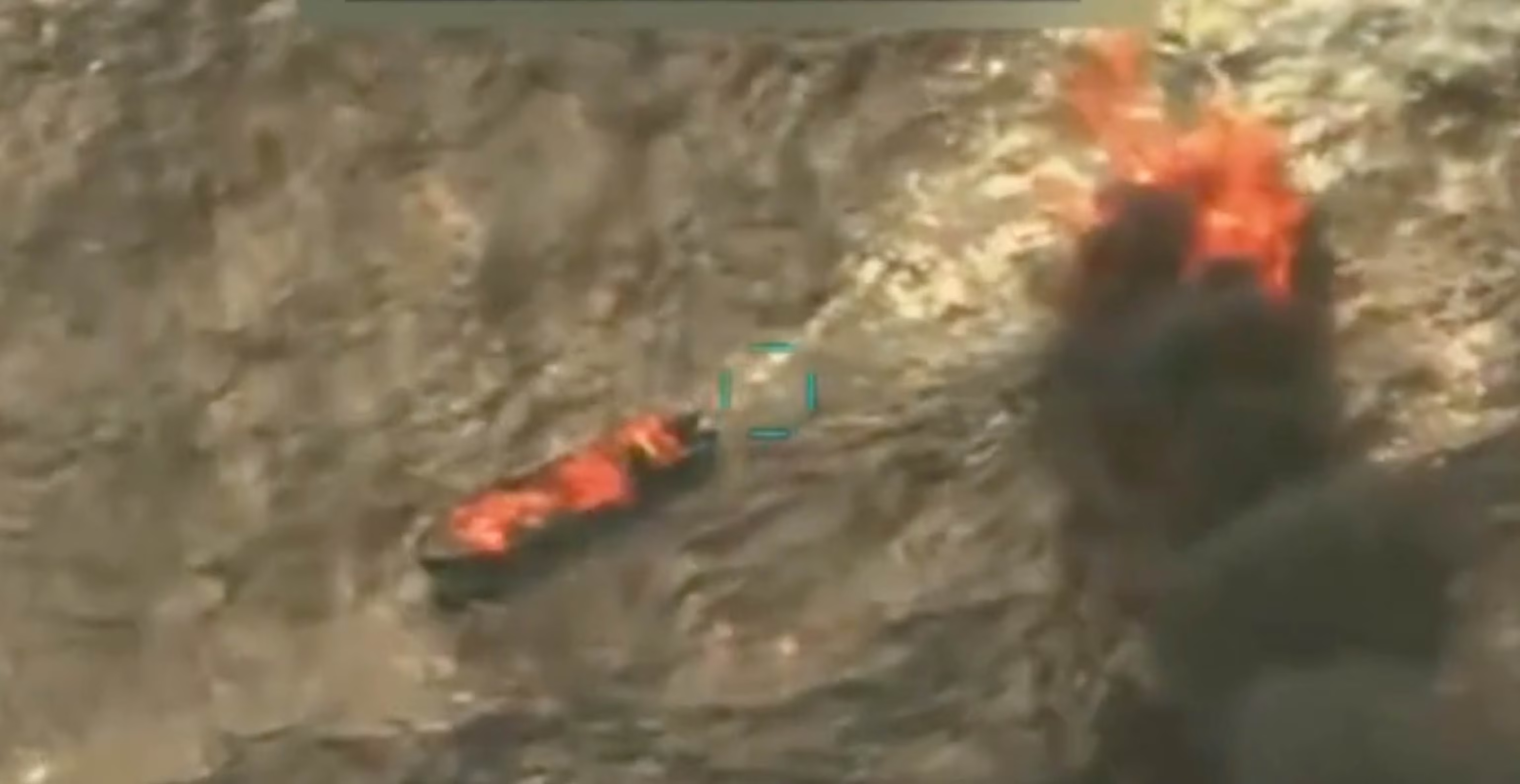
A recent US military operation in the international waters of the Caribbean, proximate to Venezuela, resulted in the deaths of three individuals aboard a vessel identified as being connected to drug trafficking networks. This incident, confirmed by the Southern Command’s official communications on Friday, marks another escalation in a series of interventions along what military officials describe as a critical corridor for organized crime. The operation was conducted under the umbrella of Operation Southern Lance, an initiative that has been active since August and has seen multiple engagements across both the Caribbean and Pacific regions.
The latest engagement contributes to a rising tally of fatalities from these US military actions, now reaching 110 since mid-2025. This week alone, three separate actions have occurred under the command of the newly appointed commander, Francis Donovan, indicating a discernible increase in operational intensity within the area. These continued military efforts unfold against a complex diplomatic backdrop, particularly Washington’s recognition of the interim government led by acting president Delcy Rodríguez in Venezuela. Despite this recognition, a strategic shift in military approach has been signaled by the Trump administration.
A significant development in this evolving strategy came on Friday with the announcement that the USS Gerald R. Ford, the world’s largest aircraft carrier, is being redeployed. Until recently, the carrier had maintained a patrol presence along the Caribbean coast near Venezuela. Its new assignment takes it to the Middle East, a move communicated to its crew on Thursday. Current projections suggest the USS Gerald R. Ford will not return to its home ports until late April or early May, at the earliest. This redeployment introduces considerable uncertainty regarding the future configuration of the US military presence in the Caribbean, especially following months of sustained operational engagement.
The sustained naval and air presence in international Caribbean waters had previously served as a precursor to more direct intervention. Notably, this presence preceded the military action on January 3rd, when US forces detained Nicolás Maduro in Caracas, subsequently transferring him to a federal prison in New York. The departure of a key asset like the USS Gerald R. Ford from the region raises questions about the methods and resources that will be employed to maintain operational tempo and objectives in the absence of such a prominent naval platform.
Observers are now considering how the military might adapt its tactics to compensate for the carrier’s absence, particularly in an environment where interdictions of alleged drug trafficking vessels have become more frequent and, in some cases, deadly. The strategic implications of this shift extend beyond immediate operational concerns, touching upon broader geopolitical dynamics and the perceived commitment of resources to the Caribbean theater versus other global flashpoints. The ongoing situation underscores a period of recalibration for US military strategy in the region, even as the stated mission against organized crime networks continues to generate significant action and, tragically, casualties.
