

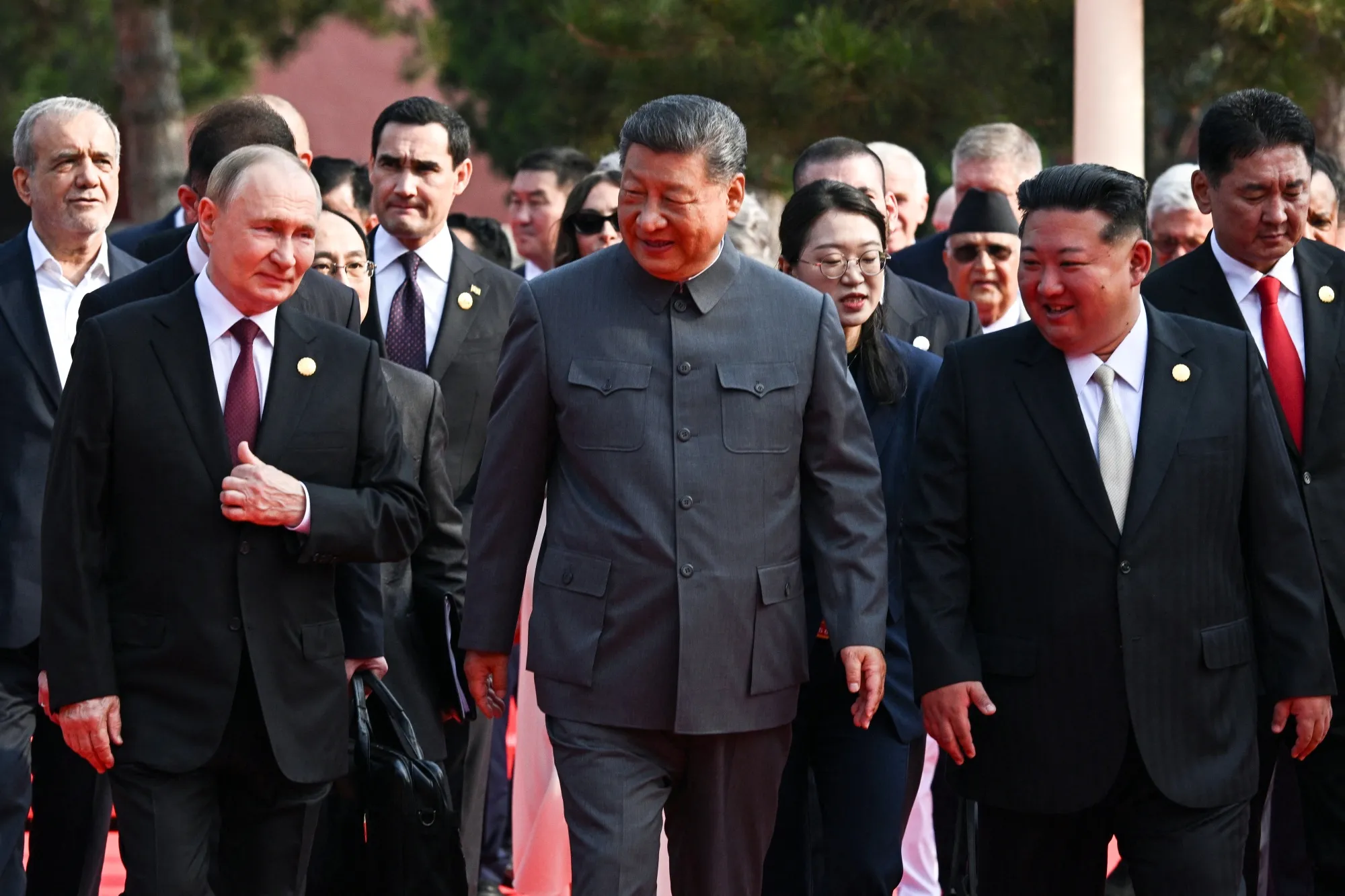
North Korean leader Kim Jong Un has emerged as one of the world’s most in-demand figures on the diplomatic circuit, with President Trump expressing interest in meeting him during a planned Asia trip next month, alongside separate interest from South Korean President Lee Jae Myung and Japanese Prime Minister Sanae Takaichi.
The surge in interest follows Kim’s appearance alongside Chinese President Xi Jinping and Russian President Vladimir Putin at a major military parade in Beijing last year, a show of alignment that underscored North Korea’s deepening ties with both powers. Kim also holds an outstanding invitation to visit Russia.
Much of the renewed attention traces back to economics as well as geopolitics. A new bridge connecting North Korea and China officially opened earlier this month, while a separate border crossing with Russia launched in September, both of which have deepened Pyongyang’s trade ties with its two largest patrons and further blunted the impact of international sanctions.
Those deepening economic links give Kim more room to maneuver diplomatically than he has had in years, reducing North Korea's dependence on the kind of sanctions relief that previously made Washington the central player in any negotiation over the country's future.
The competing interest from Washington, Seoul and Tokyo reflects a broader recalibration, with regional powers increasingly treating engagement with Kim as a strategic necessity rather than an optional gesture, even as Trump himself has recently downplayed the odds of a meeting actually materializing next month.
Whether any of these overtures produce an actual summit remains uncertain, but the scramble among multiple governments to secure access to Kim marks a notable shift from the isolation North Korea faced just a few years ago, driven in large part by its strengthening economic and strategic ties with Beijing and Moscow.