

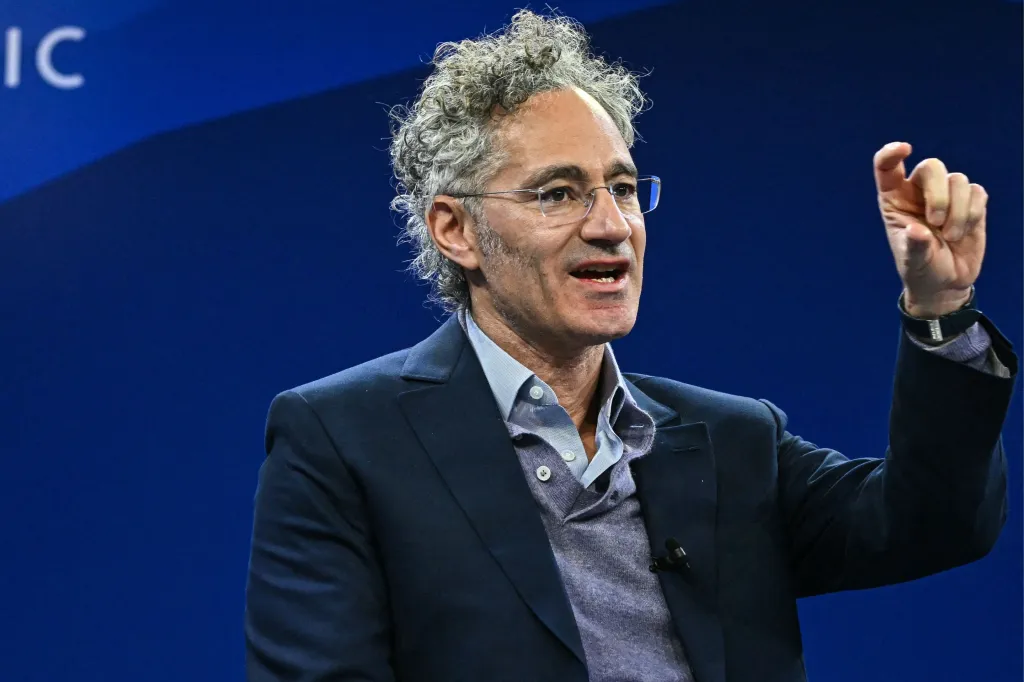
The artificial intelligence boom, a transformative wave reshaping industries globally, has also amplified long-standing concerns about wealth concentration. Palantir CEO Alex Karp, whose personal net worth currently stands at roughly $15 billion, recently articulated a stark vision of AI’s economic impact, suggesting that while the technology could elevate the average person’s standard of living, its primary beneficiaries will be those already at the apex of the wealth pyramid. Karp estimates that AI could make him “20x wealthier,” pushing his fortune towards $300 billion, even as he predicts middle-class workers might only see their salaries double over the next decade. This disparity, he described on the MDMeets podcast with Axel Springer CEO Mathias Döpfner, represents a “complete decoupling of unimaginable wealth and normal wealth.”
Karp’s candid assessment highlights not only the scale of potential new fortunes but also who is poised to accumulate them. He characterized these future ultra-rich as “very oddly shaped IQ specimens that you probably wouldn’t want to have over for dinner,” suggesting a growing chasm in not just wealth, but also social connection and understanding. Beyond the accumulation of riches, Karp also expressed unease about the narrative surrounding AI, noting that “the overselling of AI in this country is really somewhat disconcerting.” He believes much of this exaggerated promise comes from the very individuals who stand to gain the most.
This sentiment echoes warnings from other prominent figures in finance and technology. BlackRock CEO Larry Fink, with an estimated net worth of $1.3 billion, earlier this year cautioned that AI risks leaving a significant portion of the world behind if its benefits remain confined to a select few. Speaking at the World Economic Forum in Davos, Fink observed that since the fall of the Berlin Wall, an unprecedented amount of wealth has been generated, yet this wealth has accrued to a far narrower segment of the population than any healthy society can sustain. He posed a critical question: “What happens to everyone else if AI does to white-collar workers what globalization did to blue-collar workers?” Fink emphasized that this is not a future concern, but a present reality that demands immediate attention.
Indeed, the acceleration of wealth inequality is not merely a projection but an ongoing trend. Global billionaire wealth surged by over 16% in 2025, reaching an unprecedented $18.3 trillion, according to Oxfam. This growth rate was three times faster than the preceding five-year average. The sheer scale of wealth held by some individuals is becoming increasingly difficult to quantify; Elon Musk, for instance, saw his fortune reach approximately $833 billion earlier this year, briefly making him the world’s first trillionaire. Oxfam illustrates this by noting that a hypothetical $1 trillion fortune could withstand a 10% wealth tax, or $100 billion, and still leave its owner among the planet’s wealthiest individuals. That same $100 billion, the organization estimated, could lift over 800 million people out of extreme poverty for an entire year.
Nobel Prize-winning computer scientist Geoffrey Hinton, often recognized as the “Godfather of AI,” articulated a similar concern last year. Hinton stated that “rich people are going to use AI to replace workers,” predicting “massive unemployment and a huge rise in profits.” He concluded that this would make a few people much richer and most people poorer, attributing this outcome not to AI itself, but to the capitalist system within which it operates. While JPMorgan Chase CEO Jamie Dimon has adopted a more nuanced perspective, acknowledging the hardships faced by lower-income Americans, he also noted the “annoying” perception that wealthy individuals are becoming unbelievably rich while others are left behind. The implications of AI, as articulated by these leaders, suggest a profound recalibration of economic structures, with potentially significant societal consequences that are only just beginning to unfold.
