

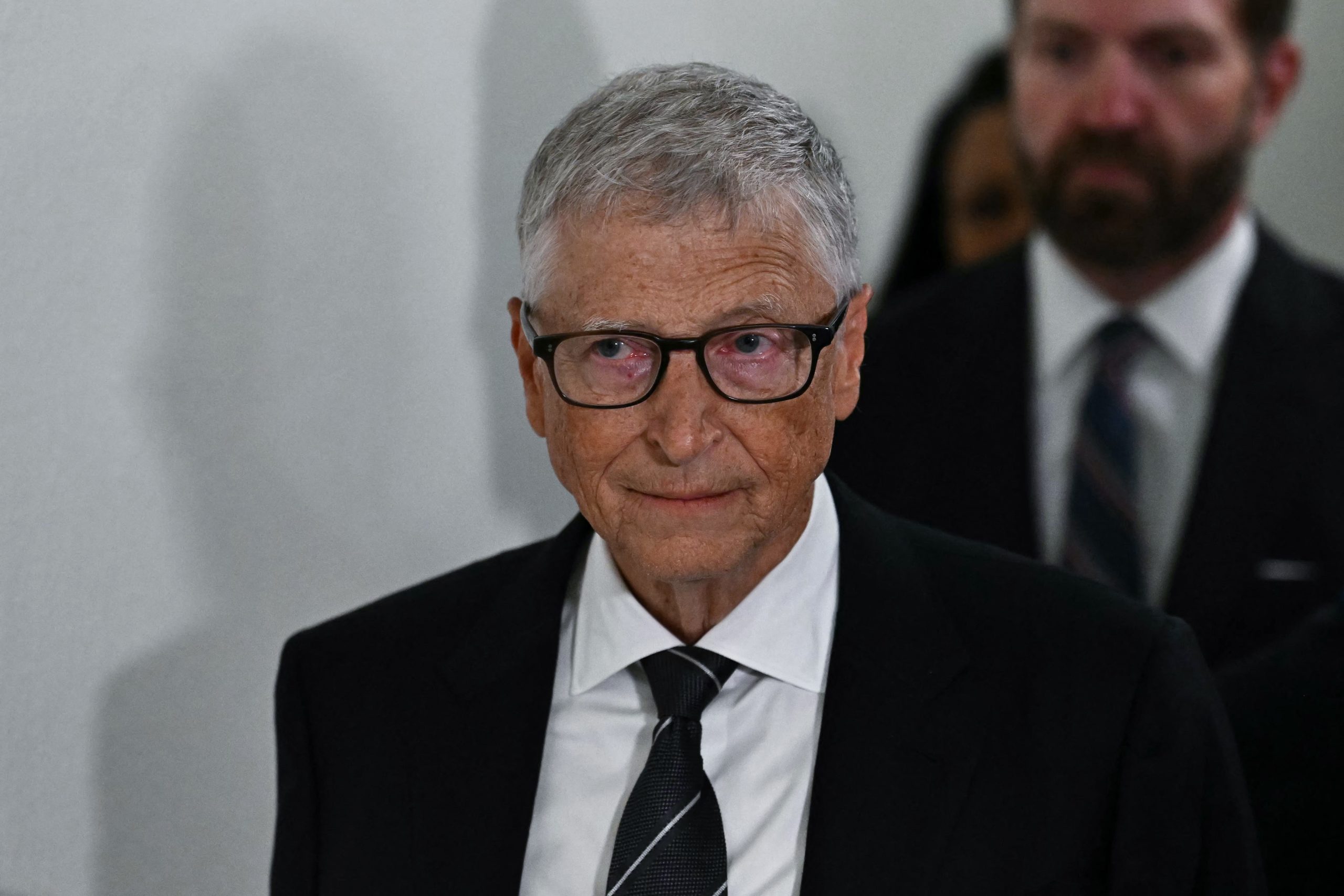
Artificial intelligence is reshaping the economy faster than most predicted, and the rewards are flowing to a small group of founders and investors who control the technology. Microsoft co-founder Bill Gates believes that trend will force a hard conversation about wealth, inequality, and who should pay for the public systems that keep societies stable.
In a recent interview with The Financial Times, Gates said the era of AI will require governments to tax extreme wealth directly. He made clear that charitable giving, no matter how large, cannot replace progressive taxation as the main tool for reducing inequality.
Philanthropy is not enough
Gates has committed nearly all of his own fortune, roughly $100 billion, to the Gates Foundation. That donation came with a condition: the money must be spent within twenty years. Even so, he said private charity cannot be treated as a reliable safety net.
The primary responsibility of dealing with inequality will always rest with governments, Gates told the newspaper. He added that philanthropy is voluntary by nature, which makes it unstable as a source of funding for schools, health systems, and social services.
Wealth is already concentrating at the top
The argument for a billionaire tax rests on data from the Federal Reserve. The richest one percent of Americans own more than half of all stocks held in the country. Because AI companies and their suppliers are among the best performing assets this year, the gains from the technology are landing disproportionately in the hands of people who were already wealthy.
Gates warned that AI could deepen the so-called K-shaped economy, where higher earners pull away while lower earners struggle to keep up. He said policymakers will need to redesign tax systems so that people with huge wealth contribute more.
Taxing the machines themselves
Beyond income and wealth taxes, Gates has also floated a tax on robots and AI tokens. In an essay published earlier this year, he pointed out that employers currently pay payroll taxes when they hire workers, but they can often deduct the cost of automation immediately. That difference, he argued, pushes companies to replace people with machines.
Not every technology leader agrees. Nvidia chief executive Jensen Huang told Fox Business that he respects Gates but does not share his view on taxing robots. Huang said he supports taxes in general, but believes there are better ways to address the economic effects of automation.
A debate with no easy answer
The disagreement between Gates and Huang captures a larger split in the technology world. Some founders believe the state should capture a share of AI-generated wealth and redistribute it. Others worry that taxing automation too aggressively could slow investment and reduce the productivity gains that might ultimately benefit workers.
What both sides acknowledge is that the current tax code was written for an industrial economy, not one in which software and algorithms generate returns at machine speed. Whether the solution is a billionaire tax, a robot tax, or something else entirely, the pressure to redesign fiscal policy is only beginning.