

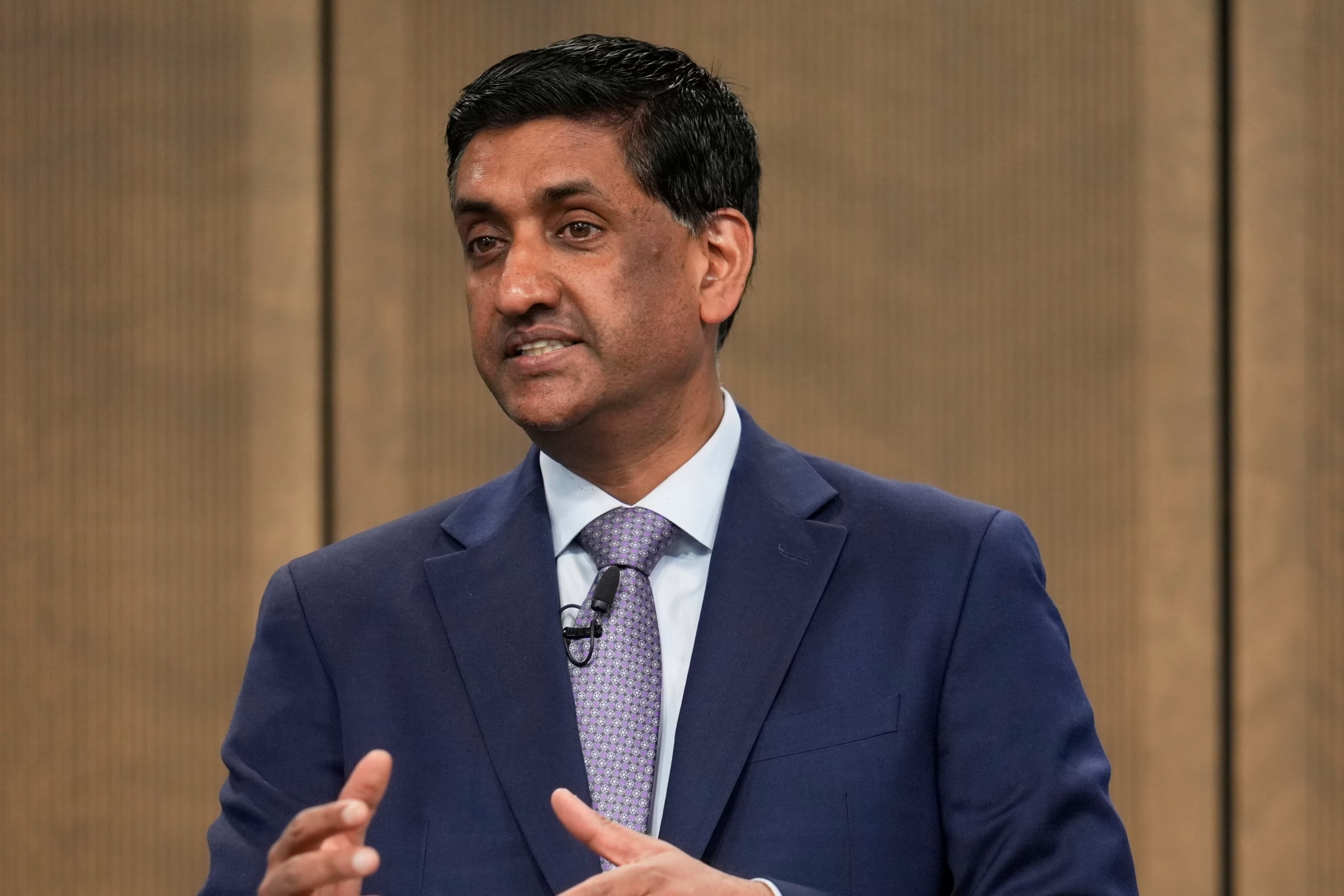
Congressman Ro Khanna, a progressive Democrat from Silicon Valley, recently embarked on a series of engagements that have drawn considerable attention, particularly his efforts to connect with constituents and political figures aligned with the Make America Great Again (MAGA) movement. These discussions, often held in areas not typically considered Democratic strongholds, illustrate a broader strategy aimed at finding common ground amidst deeply entrenched partisan divisions. Khanna’s approach involves direct engagement, focusing on shared economic concerns and areas of potential bipartisan cooperation, rather than solely highlighting ideological differences.
One notable instance involved Khanna’s visit to Kentucky, where he participated in a forum alongside Republican Senator J.D. Vance. The conversation, which touched on issues like industrial policy and the revitalization of American manufacturing, underscored a willingness to bridge the political chasm. Both Khanna and Vance have expressed concerns about the hollowing out of American industrial towns and the need for policies that prioritize domestic production and job creation. This alignment on certain economic principles, despite their divergent political bases, offers a glimpse into a potential pathway for cross-party collaboration.
Khanna has frequently articulated a belief that many voters who supported former President Donald Trump are not necessarily driven by animosity, but rather by a sense of economic displacement and a feeling of being overlooked by the political establishment. His strategy involves acknowledging these grievances and demonstrating how progressive policies, particularly those focused on strengthening the American working class, could address some of the underlying causes of this discontent. This perspective challenges the conventional wisdom that a vast ideological chasm separates these voting blocs, suggesting instead that shared economic anxieties could serve as a unifying force.
The congressman’s outreach extends beyond individual forums and public appearances. He has also engaged in discussions with various groups and individuals who identify with the MAGA movement, seeking to understand their perspectives and identify areas where policy solutions might appeal across the political spectrum. This proactive engagement represents a departure from the often-insular nature of partisan politics, where dialogue between opposing factions can be rare and often confrontational. Khanna’s stated goal is to demonstrate that even in a highly polarized environment, there remain opportunities for dialogue and progress on issues that affect all Americans.
While Khanna’s efforts have been met with both support and skepticism, they highlight a growing recognition within some political circles that an exclusive focus on ideological purity may not be the most effective path forward for a deeply divided nation. His willingness to venture into politically challenging territories, to listen to differing viewpoints, and to seek out unexpected alliances suggests a longer-term vision for American politics. The outcomes of these endeavors remain to be seen, but the ongoing dialogue itself represents a notable attempt to re-establish lines of communication where they have often broken down.
