

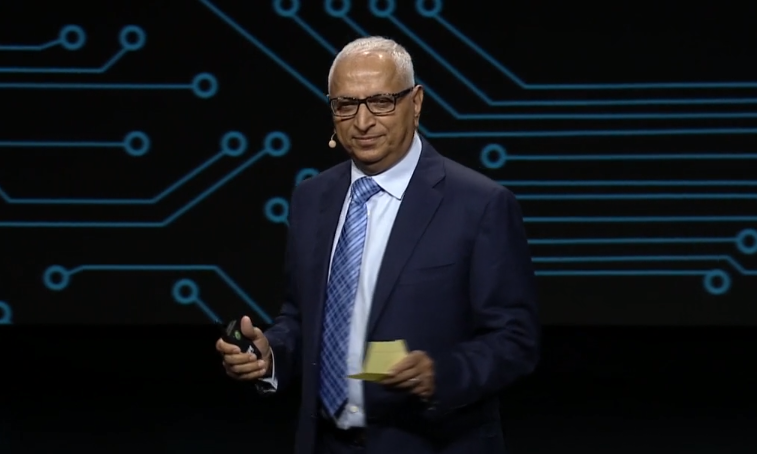
The global semiconductor industry finds itself at a familiar crossroads, navigating the cyclical currents of supply and demand, with memory prices once again taking center stage. Ajit Manocha, the CEO of SEMI, the industry association representing the global electronics manufacturing and design supply chain, recently offered a measured perspective on the market’s trajectory, particularly concerning the volatile memory sector and the broader notion of an enduring “supercycle.” His insights underscore a complex interplay of factors, from geopolitical shifts to persistent demand drivers, that shape the industry’s future.
Manocha’s assessment suggests that while memory prices have indeed seen fluctuations, the underlying demand for semiconductors remains robust, driven by an ever-expanding array of applications. Data centers continue their insatiable appetite for DRAM and NAND, fueled by the relentless growth of cloud computing, artificial intelligence, and big data analytics. Beyond the enterprise, the proliferation of 5G infrastructure, electric vehicles, and sophisticated consumer electronics ensures a baseline level of consumption that many believe will prevent the deep troughs characteristic of past downturns. This sustained demand forms the bedrock of the “supercycle” narrative, a period where demand consistently outstrips historical supply patterns.
However, the path forward is not without its convolutions. Geopolitical tensions, particularly between the United States and China, continue to cast a long shadow over the supply chain. Export controls, tariffs, and efforts towards regional self-sufficiency are reshaping investment patterns and manufacturing strategies. Manocha highlighted how these external pressures often complicate capacity planning and technology roadmaps, making forecasting more challenging than ever. Companies are increasingly diversifying their manufacturing footprints, a costly and time-consuming endeavor, but one deemed necessary to mitigate future disruptions. This fragmentation, while offering resilience, also introduces inefficiencies and potentially upward pressure on costs.
The capital expenditure required to keep pace with technological advancements and demand growth is staggering. Building a new, state-of-the-art fabrication plant can cost tens of billions of dollars, a figure that continues to climb with each successive generation of chips. This immense investment, coupled with extended lead times for equipment, means that supply adjustments cannot be made quickly. Such inertia contributes to the industry’s inherent cyclicality, where periods of undersupply can quickly flip to oversupply if demand softens or new capacity comes online simultaneously. Manocha’s emphasis on collaborative efforts within the ecosystem, from materials suppliers to equipment manufacturers and chip designers, points to a recognition that no single entity can navigate these complexities alone.
Looking ahead, the discussion around a “supercycle” isn’t merely about sustained demand; it also touches upon the fundamental shifts in how semiconductors are integrated into nearly every facet of modern life. The industry isn’t just serving traditional computing markets anymore; it’s enabling entirely new economies, from smart cities to personalized healthcare. This pervasive influence suggests that while individual product segments like memory might experience their own mini-cycles, the overarching trend for semiconductor consumption is firmly upward. Manocha’s nuanced perspective suggests that while we might not see an uninterrupted, straight-line ascent, the foundational drivers for growth are more deeply embedded than in previous cycles, making the current period distinct from historical boom-and-bust patterns. The question then becomes not if the industry will grow, but how smoothly it can manage its inevitable undulations.
