

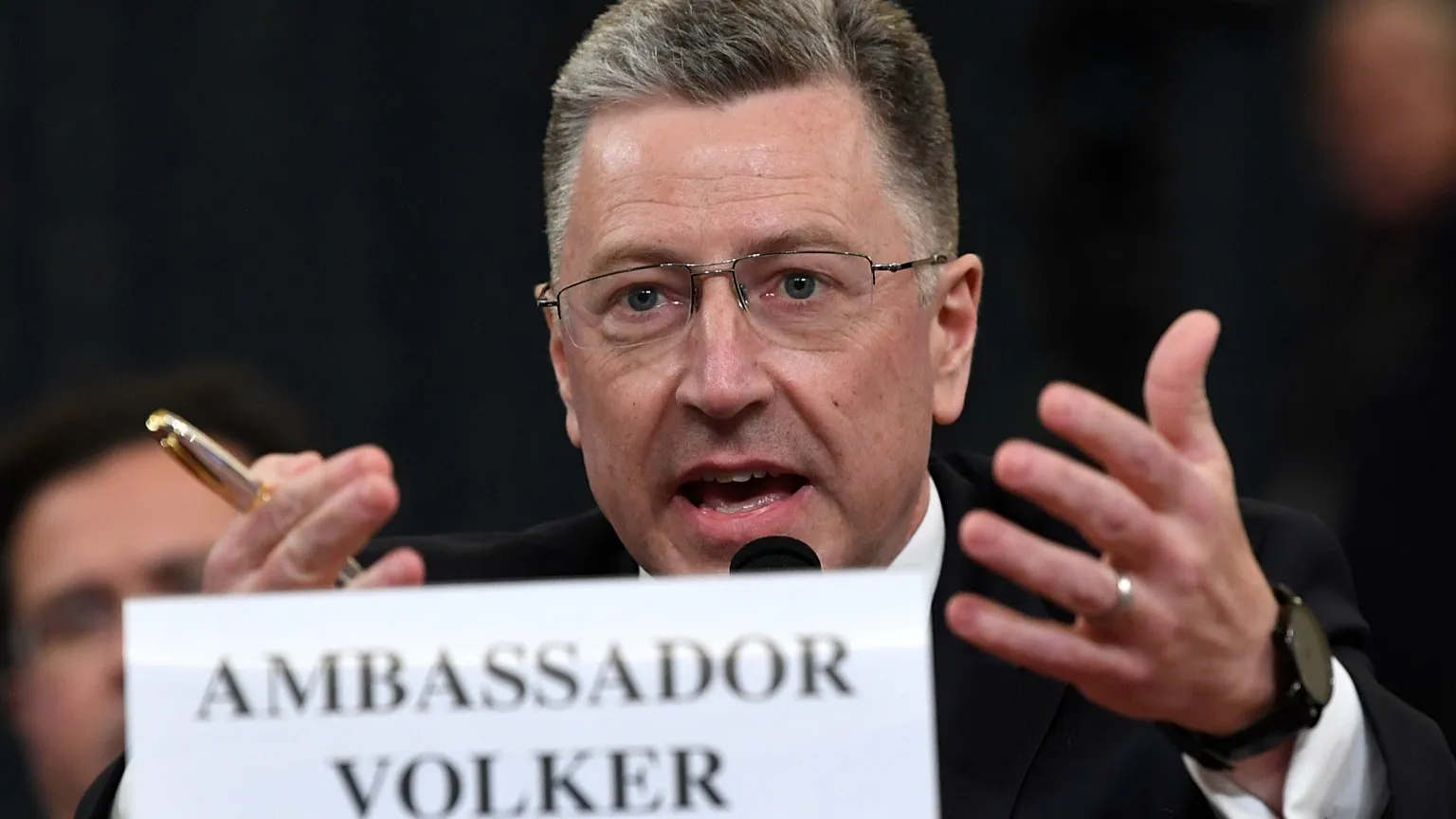
President Donald Trump’s characteristic bluntness and frequent criticisms of NATO allies are unlikely to dominate the upcoming summit in Ankara, according to Kurt Volker, a former US ambassador to NATO. Volker, who also served as the first Trump administration’s special representative to Ukraine, suggested that Trump’s personal relationship with Turkish President Recep Tayyip Erdoğan would likely temper any potential outbursts during the proceedings. This assessment comes despite Trump’s very public and often scathing remarks regarding European defense spending and, more recently, their perceived lack of support during the US-led conflict with Iran.
Trump has consistently voiced dissatisfaction with European contributions to defense, frequently labeling allies as “free riders” on American military investment. His frustration intensified following the war in Iran, where several European nations declined to offer direct support. Spain and Italy reportedly refused access to their bases, while France denied airspace to flights carrying weapons intended for use in the conflict. These actions fueled Trump’s ire, leading to accusations that allies were abandoning their obligations to the alliance.
The friction became particularly pronounced in May, when German Chancellor Frederich Merz publicly criticized the “ill-conceived” strategy behind the war. In response, Trump announced the withdrawal of 5,000 US troops from Germany, deriding European partners as “cowards” and branding NATO a “paper tiger.” Allies countered by pointing out their non-involvement in the war’s planning and its detachment from NATO’s core defense mandate. Despite a preliminary peace agreement now in place to end the conflict, Trump’s anger persists. Just days before the summit, he took to his Truth Social platform, calling the US relationship with NATO “one-sided” and not reciprocal, adding, “They were not there for us!!!”
Nonetheless, Trump has confirmed his attendance at the Ankara summit, explicitly stating his decision was out of respect for President Erdoğan. During a meeting with NATO Secretary General Mark Rutte at the White House, Trump remarked that he likely would not have gone had the summit been hosted elsewhere. This personal deference to Erdoğan, Volker believes, will shape the tone of Trump’s interactions in Turkey, potentially diverting attention from his broader grievances with the alliance.
Volker characterized the administration’s narrative regarding European non-cooperation in the Iran conflict as an “exaggeration.” He highlighted that the lack of allied participation stemmed partly from a lack of prior consultation. “We didn’t tell anybody we were going to attack Iran,” Volker explained, “And then we complained that no one was attacking with us.” This perspective suggests that while Trump may continue to voice concerns about defense spending, the immediate focus in Ankara might shift away from the recent Iran war, at least in public discourse, due to the specific host and the personal rapport involved. The underlying tensions, however, are unlikely to dissipate entirely.
