

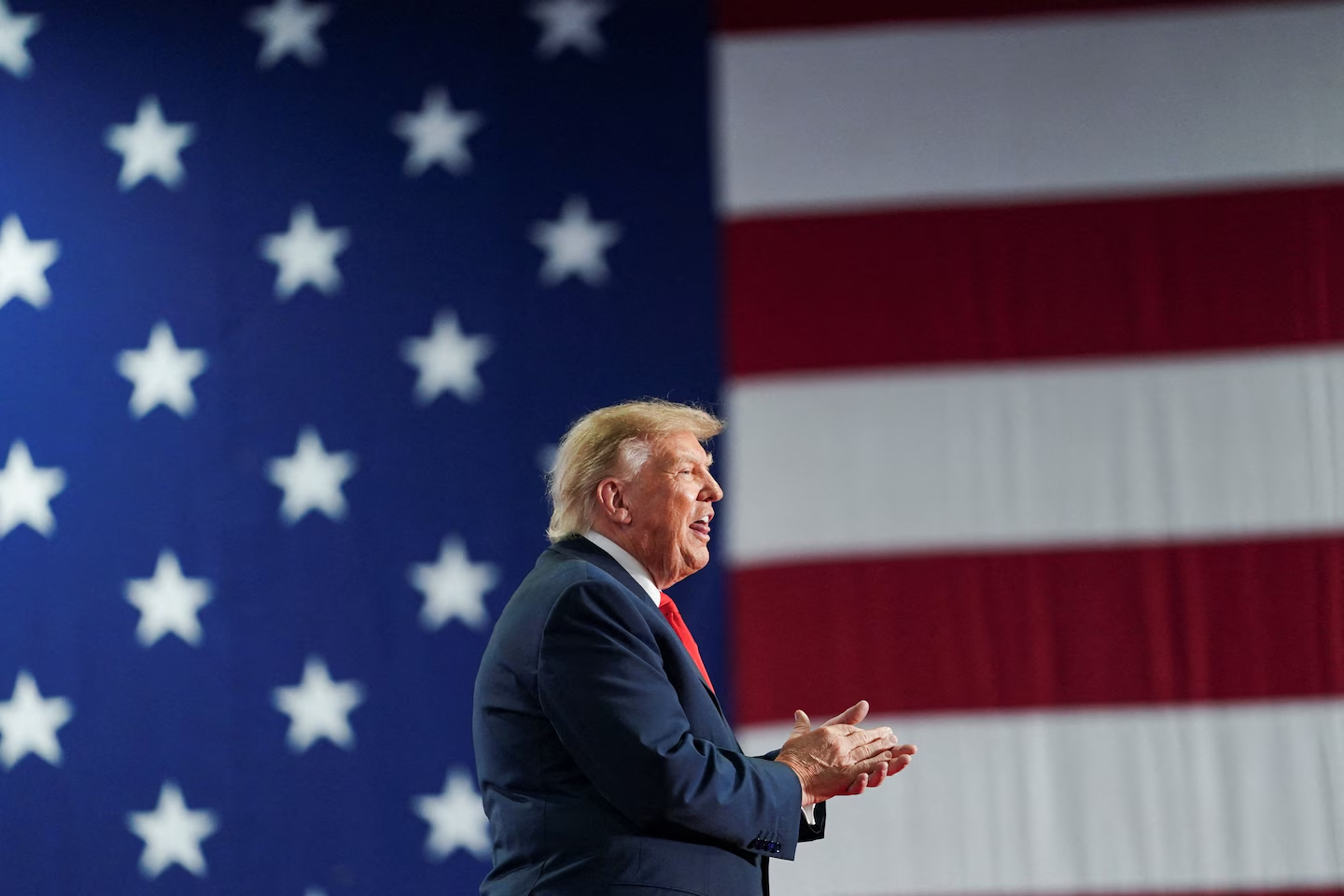
With the midterm elections drawing closer, President Trump has been making stops in Upstate New York to campaign for Bruce Blakeman, the Republican nominee for governor, telling crowds that Americans are living through a golden age under his administration. It’s an unusual use of presidential time in a state Republicans haven’t carried statewide in decades, and the choice says as much about Trump’s broader midterm calculus as it does about New York specifically.
The math on the ground is not favorable. Blakeman trails by double digits in many public polls, a gap large enough that few strategists would call the race competitive in the traditional sense. Trump’s bet is narrower than winning the governorship outright: his advisers argue that his physical presence can turn out conservative voters who might otherwise skip a midterm cycle, padding Republican numbers in down-ballot races even if the top of the ticket remains a long shot.
That logic reflects how Trump’s team is approaching the midterms more broadly. With Trump himself not on the ballot, the party has leaned on the idea that showing up in a supporter’s backyard is the most effective tool available to minimize losses, treating rallies less as persuasion efforts aimed at swing voters and more as turnout operations aimed at the base.
The strategy is also an attempt to counteract headwinds Republicans are facing heading into the midterms, including negative sentiment around the economy. The hope inside the campaign is that Trump can replicate some of the energy he generates when he is personally on the ballot, even in races where he isn't, by making direct appearances rather than relying on surrogates or national advertising alone.
Upstate New York fits that approach because it offers a dense concentration of conservative-leaning voters in an otherwise blue state, the kind of terrain where a single rally can plausibly move turnout numbers in nearby congressional and state legislative races even if it doesn't move the governor's race itself.
Whether the approach works will become clearer as more midterm results come in, but the New York stop is a preview of the playbook Trump's team is running nationally: fewer bets on competitive statewide races and more bets on the idea that Trump's personal presence, deployed strategically, can hold the floor under Republican losses elsewhere on the ballot.